
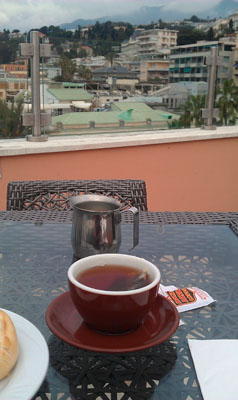
As a general rule, the further south one travels in Europe, the less rosy the tea prospects become. I would never go to Spain, for example, without packing a full brewing kit, as I have learned through bitter experience that hotel rooms there often lack even basic water-heating apparatus. There are, of course, isolated British-occupied enclaves where this is not the case, but away from the cosy Costas the tea situation is as arid as the parched hills around Madrid.
It pains me to report that the situation is even worse in Italy if the evidence of my recent visit to the northern coastal resort of Sanremo is anything to go by. Having hired a spacious charabanc at Nice airport, I proceeded along the old Riviera coast road through Monte Carlo (which was bustling with preparations for the Grand Prix – I was thrilled to find myself suddenly swinging around the iconic ‘Loews Hairpin’ corner, the scene of Lewis Hamilton’s climactic tussle with Felipe Massa in the 2011 event, but I digress…).
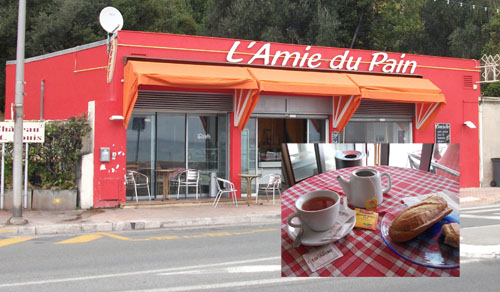
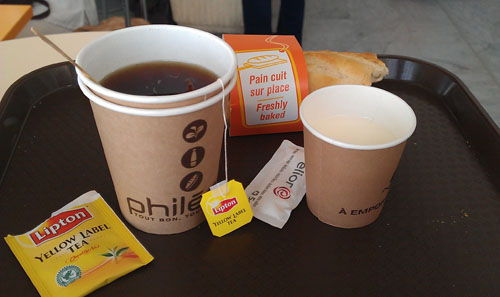
Half a kilometre from the Italian border I stopped off for a quick refresher at what is probably the Riviera’s least pretentious café, where I enjoyed a simple baguette and a pot of the ubiquitous Lipton’s Yellow Label. It was serviceable enough by French standards, and I would have cherished it a great deal more had I any inkling of the ordeal that awaited me on the other side of the border.
There is a distinct change as one passes from the French to the Italian Riviera. The new buildings are uglier, the old buildings grubbier and more dilapidated, the palm trees less healthy.
Battling my way through cantankerous and unpredictable traffic, I missed the concealed turn-off to the Sanremo Hotel Nazionale and found myself negotiating a tangled maze of steep, narrow back-streets. Judiciously pulling over to let a bullish delivery truck pass, I neatly sheared the front number-plate off an Audi that was protruding somewhat from its parking bay at the base of a run-down apartment block. The alarm went off and a hairy woman with flailing arms appeared on the fifth floor balcony; shortly thereafter, she emerged onto the pavement with her spouse, a Hungarian immigrant whose Italian was no better than mine and English non-existent. I’m not one of those misguided souls who expect every Johnny Foreigner to understand the Queen’s English, but under these multi-lingual circumstances our respective French and Italian accident forms took an unfeasibly long time to complete.
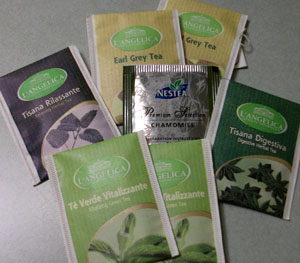
As you may imagine, this stressful experience left me in dire, almost pathological need of a restorative cup of tea, so when I arrived, finally, at my hotel room I was heartily relieved to find that a kettle had been provided, along with an assortment of what looked like fairly standard one-cup tea sachets. On closer inspection, however, it turned out that only two of the varieties on offer actually contained tea, contaminated beyond use in both cases with various additives. I know that Earl Grey has its apologists, but if I wanted to drink tea that tastes like suntan lotion, I could brew up a cup of Tesco Value and squirt some Ambre Solaire into it.
I had, of course, packed my own supply and was soon calming my nerves with a delicious serving of M&S Luxury Gold.
The first indication that I had stumbled into hostile territory came a little later when I was taking dinner in the hotel restaurant. I had chosen the reasonably priced and rather moreish ‘Tourista’ set menu, which included a cup of c*ffee as standard. As is my custom in these situations, I politely requested that the default offering be substituted with a pot of tea. The waiter flared his nostrils disdainfully, and with a toss of the head frostily informed me that it was c*ffee or nothing before mincing away to serve another table.
Suffice it to say that I did not leave a generous tip.
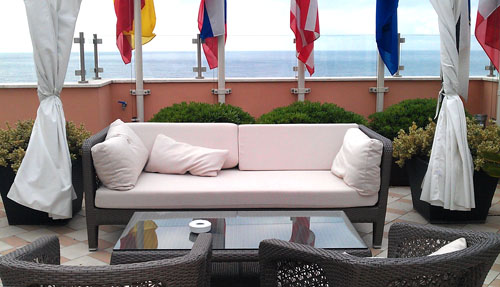
Breakfast was hardly an improvement. The setting was glorious – an al fresco rooftop terrace overlooking the town – but the tea on offer was criminally lacking. The kitchen staff were plainly aware that there is a drink called tea that involves dipping dried leaves in hot water, and that some guests might want to enjoy a cup of this mysterious beverage with their potato omelettes and cured ham, but that’s where their understanding stopped. The quality of the leaf was dismal, and the hot water was the wrong side of 80ºC by a significant margin. The resulting tepid slop cried out to be tossed over the balcony into the streets below, and I was forced to return to my room where I brewed a fine cup of piping hot Bewlay’s Irish Breakfast with which to resume my seat on the terrace.
I’m glad that I did, for it was to be my last taste of tea for a gruelling thirteen hours…
I had a number of promotional duties to perform on behalf of my funding body, The British Tea Council, which started with handing out sample packs of selected British blends to a locally sourced distribution team. As soon as Roberto, Luigi, Stefano and Dirk had been dispatched with their precious offerings, I embarked on a tour of local businesses to espouse the benefits of making tea available in the workplace. Every establishment I went to seemed to have a wheezing, chrome-plated monstrosity capable of retching up a dozen different types of c*ffee, but no kettle, and I was kicking myself for not having taken my trusty Russell Hobbs with me. Rookie error, frankly. By mid afternoon, having drunk only water since leaving the hotel, I was starting to feel discommoded and slightly fretful. In desperation I darted into a grocery store between appointments, intending to purchase several litres of bottled ‘Iced Tea’ (my usual fallback when the fresh option is unavailable). All they had was a solitary, dust shrouded 50cl bottle of Liptons Peach Flavoured, which is a poor option at the best of times as it tends to make your tongue feel like a woollen sports-sock. This particular specimen was more than two years past its best before date and had little thready things floating around in it so, with heavy heart I returned it to the back of the shelf. Things were not quite that bad – yet.
The rest of the afternoon remained resolutely tealess and the only thing that kept me going was the thought of the personal treasures waiting for me by the kettle in my hotel room. But first there was one more duty to fulfil – I had arranged to take Roberto and my other distributors to dinner as a gesture of thanks for their hard work. We retired to a pleasant-seeming restaurant in a side street to the left of the Casino dí Sanremo where my guests ordered huge quantities of food, mainly slabs of extremely rare steak served on a thin bed of lettuce leaves. I raced my way through a lightly-topped pizza, brushed aside the dessert menu and with great anticipation asked the friendly and attractive waitress for a pot of tea. She laughed in my face. Not a cruel laugh, not derisive, just a peal of simple merriment at the sheer ridiculousness of my request.
I suppose it was one of those ‘not in Kansas anymore’ moments. I stood up in a sort of daze, made my excuses, bade my farewells, settled the surprisingly large bill and staggered out into the night.
The rest of my stay in Sanremo is something of a blur, shrouded in a trauma-induced mental fog that did not lift until I ordered a cup of tea in the departures lounge at Nice airport and was treated like a normal human being – but not before enduring one final slap in the face. On my last morning in that godforsaken Italian hole I took a brisk walk along the esplanade that runs westward out of the town centre and discovered the entire stock of samples that I had entrusted to Roberto and his cohorts piled up in a builder’s skip.
I sincerely hope that my experiences in Sanremo are not symptomatic of the state of tea in Italy as a whole, but until I have conducted further investigations I must advise British visitors to that country to proceed with extreme caution – or even better, to go somewhere else entirely. Germany, perhaps.
 theteacaddyuk