
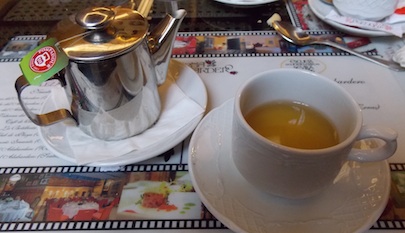
English Breakfast Tea – Seville Style
One thing that can never be said of the international tea business is that it’s dull or predictable. For several months now, I’ve been intimately involved with a couple of hush-hush BTC trade missions that have taken me from the snow-capped mountain fastnesses of Switzerland to the steamy vice-dens of Macau – with a few touches of Bond-style intrigue thrown in along the way. Contractual and legal restrictions prevent me from giving any further details at present, except to say that by the end of it all I was sorely in need of a break.
Those familiar with my views on Spain will be agog at the news that my chosen leisure destination was Seville. This was not the random act of masochism that it might at first seem, for I had been tipped off about a little place of particular interest in the city’s Macarena district (from whence, one imagines, the eponymous floor-filling disco-dance hit originated). It’s a depressing fact that throughout Spain – and particularly in the south – genuine tea enthusiasts are forced into a way of life reminiscent of Jewish Conversos during the Inquisition. In public they dutifully swill thick coffee, corrosive sherry and cheap beer along with their friends and countrymen, but behind closed doors the bone-china pots and fragrant single-estate Darjeeling emerge from hidden compartments under the floorboards and tea is taken with thin-cut crustless sandwiches, buttered scones and malted milk biscuits.
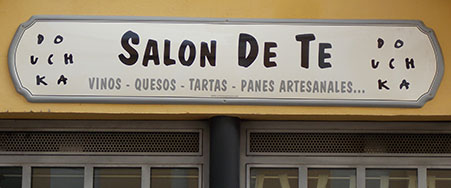
An oasis in the wilderness
The Salón De Té Douchka, on the calle San Luis is one of a tiny handful of semi-underground places where these defiant té-pistas can conduct their rituals and indulge their passions in public, among their own kind and, for the most part, without fear of violence. It was something I had to experience.
My flight landed too late to seek out this shrine to the true leaf on the day of arrival, so I busied myself setting up my travelling tea-station in the hotel room and perusing a pocket guide to other local attractions. The hotel itself was enchanting, occupying a warren of ancient houses arranged around sunken inner courtyards linked by underground passageways. Fittingly, this had once been the last secret holdout of the Sevillian Jewish community in the dark days of the 16th century, before they were slaughtered or assimilated. I sampled the house tea in the WiFi lounge before retiring to bed, and was predictably underwhelmed.
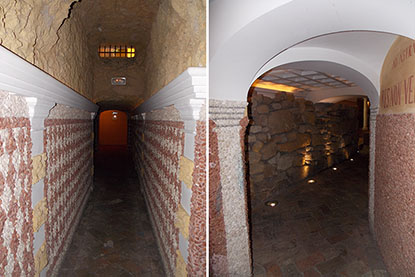
Which way to breakfast?
The tea on offer in the subterranean breakfast room the following morning was no better – significantly worse in fact – and I elected not to soil my palate with it before setting off to investigate the anticipated pleasures lying in wait for me at the Douchka. Imagine, then, my disappointment on finding the establishment closed. I was not immediately alarmed. Spanish opening hours are a complete mystery to me and I assumed that I had simply got my timing wrong. I unfolded my list of non-tea-related things to do and strolled through the sunlit cobbled streets of the old town, making my way to the Cathedral. I was eager to see its famous central altarpiece, a spectacular gothic retablo carved with numerous intricately detailed bible scenes and dripping with Conquistador gold – but once again, disappointment reared its head. The entire edifice was shrouded with plastic tarpaulins, and although the signs claimed it was being restored, I learned from an unofficial source that the gold is being stripped out to pay off the Germans, and will be replaced with metallic car paint.
The Douchka was still shuttered and dark when I returned that afternoon, and again the following day. While I was peering forlornly through the dusty slats an elderly couple emerged from the building next door and turned in my direction. “Buena tarde, señor y señora.” I offered in my best Google Spanish. “¿Cuándo es el salón de té abierto?”
At least, I think that’s what I said, but their reaction suggested that I might have accidentally offered to gut them with a filleting knife and hang them by their entrails from the Torre de los Perdegones. The old man pointed a trembling finger in my direction, croaked something that sounded like “¡No hay té!” and dragged his wife (as I assumed the lady to be) back inside before I could reassure them. I tried asking the same question in local shops and bars, where reactions ranged from surly incomprehension to outright hostility, and I’m sorry to report that the Douchka remained resolutely barred and bolted for the remainder of my stay.
It would be ridiculous to conclude from such scant evidence that the Douchka’s proprietor has been dragged away in the dead of night and tossed into a dungeon under the Alcazar Palace where he’s being ‘persuaded’ to renounce the way of tea by men in pointed white hoods. He’s probably just on holiday or something – I’m sure that’s all it is – but this is Spain and old habits die hard, so if any readers find themselves in Seville during the coming months, please take a stroll down the calle San Luis and let me know if there are any signs of activity at No. 46.
Despite this setback the trip was not entirely wasted. While wandering aimlessly through the Casco antiguo district on my final day, I stumbled across something rather extraordinary nestled amongst the tapas bars and tourist boutiques. The sign above the heavily reinforced door said Pasión por el Té and, remarkably, it was open for business. As I stepped inside I was filled with a sense of awe and wonder that had been conspicuously absent during my trip to the cathedral. Here was a tea shop with breathtaking purity and clarity of purpose. Shelf after shelf of neatly hand-labelled foil packets containing rare treasures from the world’s most celebrated tea gardens lined the walls, gleaming in the soft light. I’m not ashamed to admit that I was quite overcome. The owner, a personable young fellow called Ignacio with a decent grasp on the English language, was kind enough to offer me a chair, and when I had recovered my composure we traded tea-stories for a pleasant half-hour or so while a Holy Day procession snaked noisily by outside. Before I left, laden down with truly self-indulgent quantities of fine leaf, I commended him for his dedication and bravery. With a wry chuckle he told me that he wasn’t so brave and showed me the panic room behind the counter.
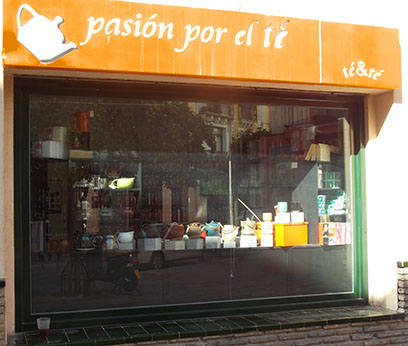
The Pasión and the Glory
It’s shameful that an honest trader has to take such extreme measures to protect his life and livelihood in what is supposed to be a modern democratic country, and I have written a stiff letter expressing my concerns about the matter to Nils Muižnieks, the European Commisioner for Human Rights. I urge all my readers to do the same.
It belatedly occurs to me, as I sit at home writing these words and enjoying a pot of finest Pasión por el Té Chamray Nilgiri, that I should have asked Ignacio about the Douchka. The té-pistas of Seville are a very close-knit community and if anyone was going to know what had really gone down, he was the hombre.
 theteacaddyuk