Unknown's avatar

Spectre of Doubt

CORRECTION

Earlier versions of this post contained a number of assertions about secret James Bond screen tests featuring a leading British actor. The Tea Caddy has subsequently learned that this information was entirely false and its source wholly unreliable. I have been assured that no such screen tests took place, and that the actor in question was not at any point required to play out a scene in which he demanded that Q “pimp his ride like a bitch”. Sorry for any confusion. If there’s a lesson in all this, it’s that I should stick to what I know and leave the celebrity gossip to the experts.

A Winter Warmer

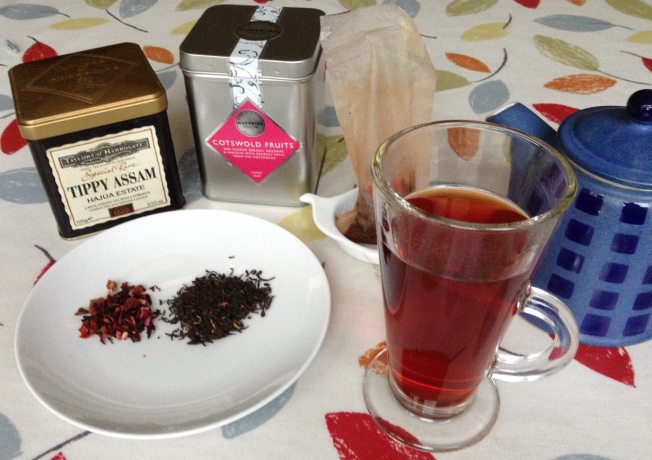
It’s no secret that I detest the lazy habit of calling any old bit of dried plant matter ‘tea’, so I ought to be writing a letter of complaint to the makers of Cotswold Fruits Blend Loose Leaf Tea, currently on sale as a ‘Best of British’ item in M&S food stores. It contains zero percent tea, and is loose leaf only in the sense that muesli is also ‘loose leaf’. Had I read the label more carefully the tin would not have ended up in my basket, but I only had my driving glasses with me at the time.

IMG_0059

A fortuitous confluence of flavours

After realising my mistake I was all set to put the stuff out for bird feed when it occurred to me that I should at least try blending it with some actual tea. The results were unexpectedly delightful, and I wholeheartedly recommend adding a spoonful to your favourite leaf for a light but satisfying winter drink that stimulates the taste buds while warming the cockles.

Don’t Try This At Home

danger

It should probably have come as no surprise to learn that some readers took my words at face value when I suggested that a power tool was required to drag the full potential flavour out of round teabags (previous entry). My sympathies go out to the family of Mr G Fradd from Whitstable and to the anonymous reader who obliterated his great-grandmother’s antique Spode teapot with a Bosch PSB 750, but my legal team has assured me that I cannot be held liable for any losses incurred. The plain fact is there’s only one guaranteed way to avoid being disappointed by round bags: don’t use them. (And that’s my final word on the subject.)

Unknown's avatar

Moon Glampers

The Sunday Times TV critic, AA Gill, doesn’t mince his words when something on the box displeases him. I don’t always agree with his elitist, clenched-buttock judgements, but his recent, surgically-precise evisceration of Sue Perkins (Nov 16) was right on the money. The profoundly unremarkable Ms. Perkins has somehow become a ubiquitous part of the British television landscape, popping up on endless Z-List panel shows and hosting factual programmes on a bewildering variety of subjects about which she has neither insight nor specialist knowledge.

PERKINS - UNREMARKABLE

PERKINS – UNREMARKABLE

When watching her ply her trade, I am reminded of the nightmare world envisioned by noted American author and humanist, Kurt Vonnegut (1922-2007) in his short story, Harrison Bergeron. It’s the near future and equality legislation has gone mad, especially in the TV industry. No one can be seen to be better than anyone else and any hint of excess talent or ability is ruthlessly stamped out by the office of the Handicapper General (a post occupied by the shotgun-wielding Diana Moon Glampers): the overly-nimble are hobbled with bags of lead shot, the quick-witted fitted with headphones that deliver deafening blasts of noise at random intervals, and the physically beautiful dressed down and uglied-up. Perkins, transplanted into this fictional scenario, would require none of these handicaps.

VONNEGUT - PEERLESS

VONNEGUT – PEERLESS

It’s unclear, in Vonnegut’s brief narrative, whether or not food and drink come under the remit of the Handicapper General, but I fear that Mrs Moon Glampers (or someone very much like her) has been at work in the tea departments of Britain’s major supermarkets. Why else would they be peddling premium teas in ridiculous little round bags that render the flavour virtually indistinguishable from that of their low-grade budget offerings?

This is not a new issue. I have been campaigning against the scourge of the round tea-bag for more than a decade now and, at last, the tide is turning. In July this year the British Advertising Standards Agency definitively ruled that bigger bags really do make a better brew. In light of this landmark decision I feel that it’s time for a fresh blast of the trumpet in the form of an open letter to Steve Rowe, executive director for food at one of Britain’s most respected retailers, Marks & Spencer.

ROWE - UP THE CREEK

ROWE – UP THE CREEK

Dear Mr Rowe,

This letter concerns M&S Luxury Gold tea and your company policy with regard to tea bags. 

In its loose form Luxury Gold is, nonpareil, the best blended black tea on the British high street. I often recommend it to tea-drinking friends, acquaintances and workmates – who are invariably delighted by its rich and distinctive flavour. I remain, however, perpetually disappointed by the bagged variety because of the pathetically diminutive round bags in which it is currently incarcerated.

Any tea-taster worth his salt knows that tea leaves need space for the hot water to circulate around them during the brewing process, and yet you insist on imprisoning your flagship blend in cramped circular quarters 35% smaller than the generous rectangular bags used for your Infusions range and almost 50% less roomy than the handsome pyramid bags chosen to grace your delicious new single estate Assam. Why is Luxury Gold so poorly served? The little round bag might be adequate for the casual tea drinker who likes to leave it soaking in milk at the bottom of the cup while the kettle boils, but for those who appreciate a properly prepared brew, it’s just not good enough.

The round bag’s cheerleaders have always dismissed as unproven any suggestion that its reduced dimensions impede the brewing process (in rather the same way that tobacco companies used to dismiss the link between cigarettes and lung cancer). Not any more. When the ASA threw out Tata Global Beverages’ complaint about a PG Tips advertisement denigrating round bags earlier this year, they officially endorsed the overwhelming body of evidence proving that larger bags have ‘better brewing efficiency’.

In the face of these unequivocal findings it seems reasonable to assume that Marks & Spencer, with its traditional emphasis on quality, is presently taking steps to eliminate the inferior, flavour-sapping round bag from its entire range of teas, including Luxury Gold, with all due despatch. Can you confirm that this is the case?

Yours sincerely,

Etc.

I shall report in these pages on how (and if) Mr Rowe responds. In the meantime, any readers wishing to add their voices to mine can reach Mr Rowe at the following address:

Steve Rowe
Executive Director, Food
Marks and Spencer Group plc
Waterside House
35 North Wharf Road
London  W2 1NW

Unknown's avatar

California Dreaming

World Tea Expo 2014 - Long Beach, California

World Tea Expo 2014 – Long Beach, California

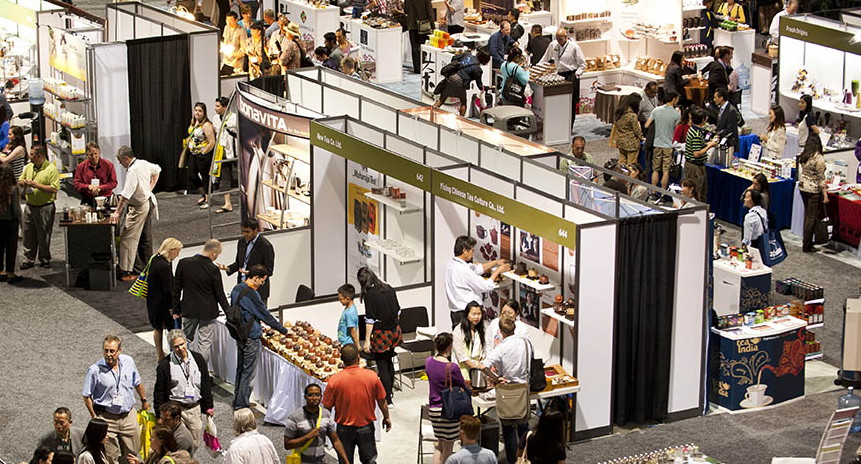
The World Tea Expo, held annually in the US at the end of May, can be a very dilute affair. It’s partnered with its idiot twin, the Healthy Beverage Expo, and cleaves to the lazy American habit of referring to any potable hot liquid that isn’t cocoa, coffee or soup as ‘tea’. Cruising the stands on exhibition days can feel rather like finding yourself at a Doctor Who convention where 85% of the stuff on show is from Blake’s 7 or Red Dwarf – and everyone else is fine with that!

When the organisers, F+W Media, announced that a ritzy new awards ceremony would headline this year’s event there was widespread muttering amongst tea purists, many of whom feared that its scope would be frivolously broad, or that commercial interests would turn the judging panel into the Tea equivalent of FIFA.

Best Beverage In A Supporting Role

Best Beverage In A Supporting Role

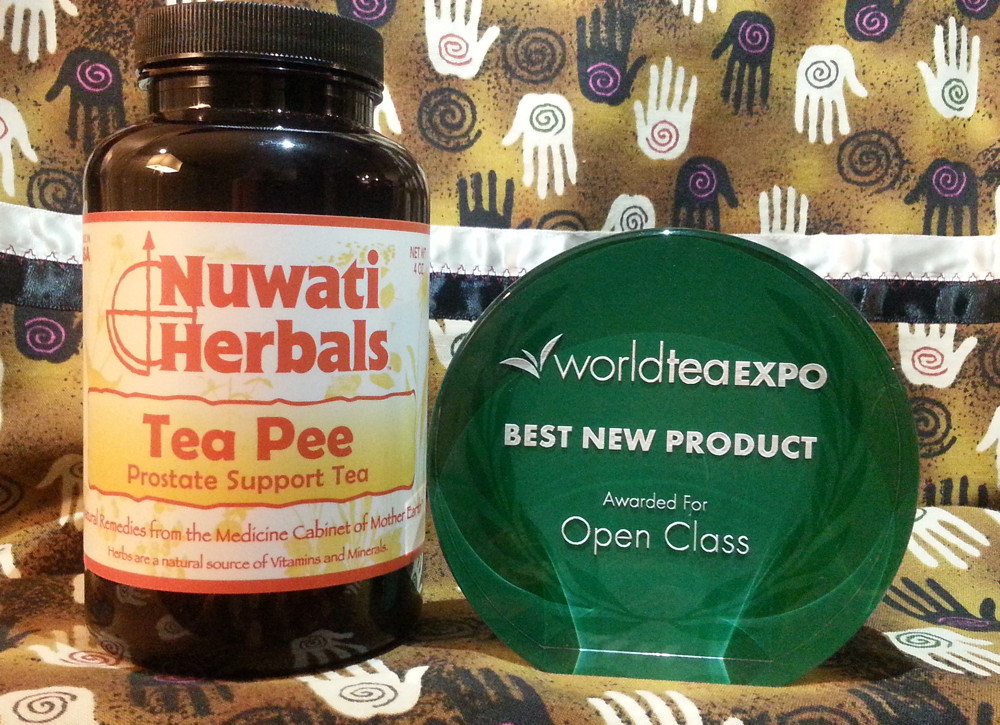
Instead, I’m happy to report that the inaugural World Tea Awards, although far from perfect, exceeded expectations by a sizeable margin. Tea scholars were celebrated, good practice rewarded and there was a surprise winner in one of the coveted New Product categories, where Nuwati Herbals, a Native American themed purveyor of natural health remedies, took the Open Class gong for its ‘Tea Pee’ Prostate Support Tea. This diuretic concoction has received literally gushing reviews in the alternative health press and, being of a certain age, I experienced a momentary flurry of personal interest in its efficacy. Disappointingly, the Nuwati web site is short on empirical data and long on self-congratulation. It turns out that Tea Pee, in addition to containing a long list of exotic ingredients like kava kava, maca maca and parsley, has its own tragic back-story of personal loss to tell, and while this might have impressed the WTA judges it had quite the opposite effect on me.

Brain Food

Brain Food

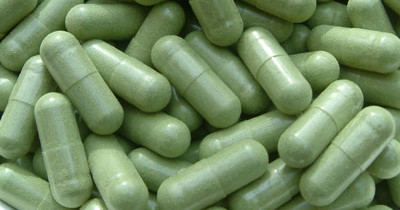
The simple truth is, you don’t need to add anything to tea for it to be effective against almost any medical or psychological condition. Barely a month passes without the announcement of some newly discovered health benefit, the latest headline-grabber coming from the University of Basel where researchers have established that green tea measurably improves cognitive function and working memory. For those who, like myself, prefer the richness and complexity of black and oolong teas, the good news is that you can ingest the green tea in extracted form and still get all the benefits. I’ve been taking three 500mg capsules every day for a week now, and in that time haven’t once mislaid my wallet, keys or umbrella, which is evidence enough that the benefits are real.

I’ll leave the last word on the World Tea Awards to my young Welsh friend, Huw. When the finalists were being announced, he tutted derisively at a German nominee called Butterflies In The Tummy, which was described as ‘a mélange of exotic fruit paired with subtle vanilla’…

“That’s not tea”, he opined in his inimitable Valleys accent. “That’s pudding, that is!”


Unknown's avatar

All That Glitters…

craftbrewer

Sorry, Dave. I can’t make you a cup of tea right now.

I’ve no idea why my dog feels compelled to roll around on dead things or the leavings of incontinent seagulls, but she’s always eager to share these wonderful achievements with me – and always surprised when I shout and back away, retching and flailing my arms.

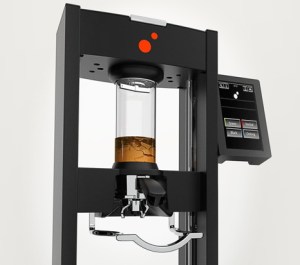
My reaction was much the same when my young acolyte and travelling companion, Huw, excitedly drew my attention to a BBC news article about a high-tech ‘tea-maker’ called the BKON Craft Brewer. This apparatus, the report claimed, uses a vacuum chamber to accelerate the infusion process by forcing water to boil at lower than normal temperatures. I thought at first that my callow friend had belatedly stumbled across an April Fool’s Day spoof, but no: the article was entirely serious – and so was he.

With a rueful shake of the head I asked him to remind me why it is that mountain climbers can’t make a decent brew.

“Because the reduced atmospheric pressure lowers the boiling point of water”, he chanted back obligingly. The penny still hadn’t dropped.

“So, why”, I enquired curtly, “would anyone even ATTEMPT to brew tea in a contraption that reduces atmospheric pressure to levels found only at the EDGE OF SPACE?”

Huw had no answer to give, and neither did the BBC’s grotesquely ill-informed news report, the remainder of which was padded out with a rehashed 2012 piece about a prototype ‘capsule-based’ tea-dispenser developed by Cambridge Consultants…

I wasn’t ready for this.

Although I’m almost fully recovered from last year’s health traumas, there are little triggers that can prompt a temporary relapse. This, evidently, was one such and, not for the first time, I was thankful to have Huw at my side. I was dimly aware of him assisting me to the sofa, easing my shoes off and gently lifting my legs onto a cushion as the familiar waves of dizziness and nausea swept over me.

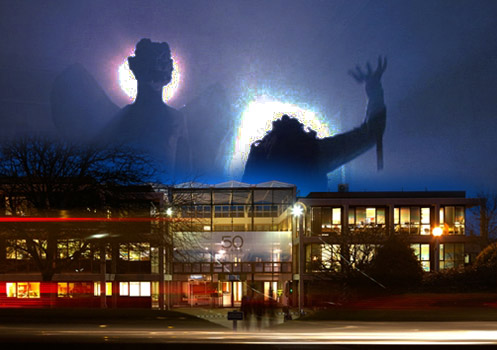
Cambridge Consultants HQ

Cambridge Consultants HQ

The reason for my distress was, of course, the pivotal role played by Cambridge Consultants in developing the loathsome round teabag. Since its unholy debut in 1985, this flavour-desecrating abomination has been responsible for the virtual genocide of the traditional rectangular bag, and my fevered mind was suddenly consumed with irrational feelings of guilt for all the years I had spent living in denial, turning a blind eye to the shattered glass and bloodstained personal effects littering the pavements, right up until the day the first brick had come smashing through my own window.

Trapped in this bleak vision of the past, I found myself reliving, over and over again, that awful moment when I cracked open a fresh box of Choicest Blend and found myself staring into the abyss. Oblivion beckoned, but just as the darkness was about to close in, a seemingly random memory pulled me back from the brink. Last autumn there was a mild flurry of excitement about a lost time capsule, rediscovered after three decades in the ground.  Some sort of Steve Jobs connection had made it newsworthy and I recall thinking that 30 years wasn’t a particularly impressive time-span – I’ve got tins of shoe polish older than that.

In my delirium, however, I imagined myself alongside Mr Jobs back in 1983, packing box after box of rectangular-bagged Choicest Blend into my own, bottomless time capsule. Comforted by this happy vision I drifted back to consciousness and found the ever-faithful Huw at my side, anxiously wafting the vapours from a fresh-brewed cup of extra-strong single-estate Kwazulu over me. I patted him lightly on the arm, regretting my earlier sharpness, and offered these words of counsel in return for his kindness:

“Do not let your tea-sense be led astray by the sparkling lure of high technology. Once you have fulfilled the basic requirement of clean, fresh water, heated to an appropriate temperature, the only true way to make a better brew is to use a better leaf. Anyone who tells you otherwise is a fool or a charlatan – or an employee of Cambridge Consultants.”

Reality Check

BKON co-founder, Dean Vastardis, putting the Craft Brewer through its paces at a trade show, concludes his demonstration with this refreshingly modest claim: “You can’t do this any other way. Except with a teapot, boiling water and six minutes of time.”

Unknown's avatar

Separation Anxiety

I’m thinking of getting myself one of those personal attack alarms, something ear-splittingly loud, preferably with a fit-inducing strobe-light attachment and pepper spray dispenser. I intend to deploy it next time I order a pot of tea and receive instead a pot of water with a teabag on the side.

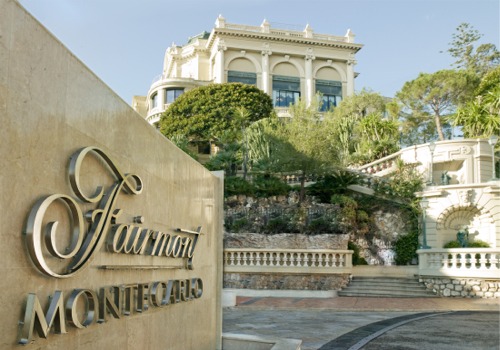
This spectacularly self-defeating practice is something I first encountered in Canada about 10 years ago. At the time I thought it a one-off piece of colonial lunacy but the ghastly habit seems to have become endemic, even in places that ought to know better. Take, for example, the iconic Monte Carlo Fairmont. Earlier in the year I found myself billeted at this breathtakingly expensive establishment during the run-up to the Monaco Grand Prix whilst serving as technical consultant on a documentary about tea habits of the rich and famous. It was here that I very nearly came to blows with a severely inebriated Chris Evans during a heated (and, on his side, woefully misinformed) discussion about the relative health benefits of tea and coffee… but that’s a tale for another time.

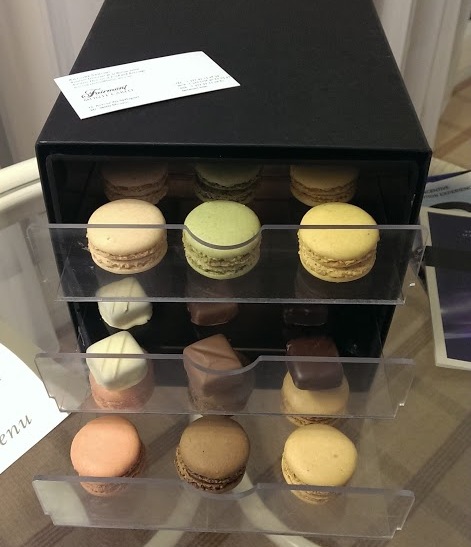
The Fairmont

The Fairmont

The Monte Carlo gig was supposed to be a relaxed affair, a gentle return to active duty after my near-fatal jet ski accident at the TCA (Tea Convention of the Americas) back in January. I was not quite fully recovered from the head trauma, but my meds were keeping the hallucinations and dizzy spells in check, and it was good to be out and about again.

Breakfast at the Fairmont is taken on a rooftop terrace overlooking the bay. There’s a mouthwatering spread on offer including made-to-order crêpes filled with whatever you fancy, and I loaded my plates generously before taking a seat in the warm May morning sunshine. Fine food, freshly-squeezed pampelmousse, a light sea breeze ruffling my hair – everything seemed picture-book perfect right up until the moment when my pot of tea arrived. Or rather, pot of water with a teabag on the side.

No blisters here

No blisters here

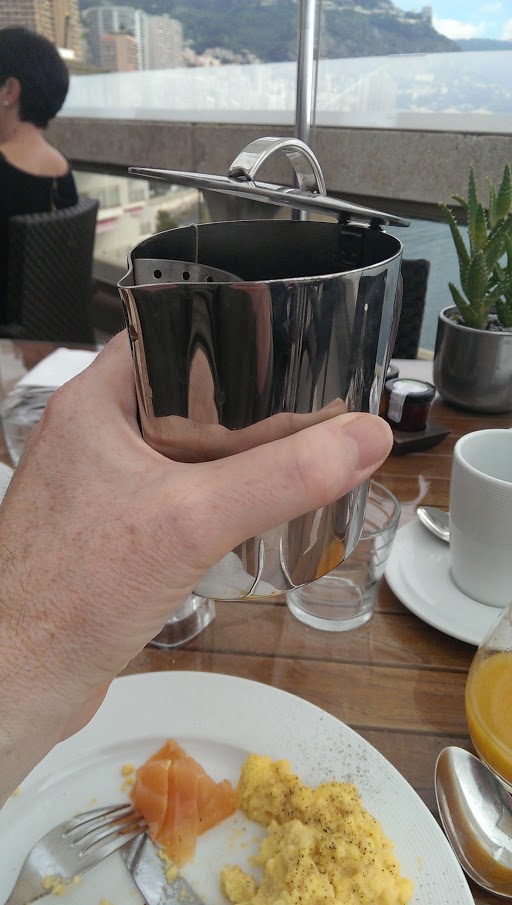
Remaining calm, I called back the garçon who’d delivered this abomination and gave him my standard mini-lecture on the basic principles of tea-making. He duly brought a second pot containing two bags, pre-immersed as requested, but had clearly misunderstood the part about using freshly boiled water. I am not especially heat resistant, yet I was able to grasp the metal body of the pot and raise it from the table without a whisper of discomfort. I held it aloft, perhaps a tad more theatrically than was strictly necessary, and asked Henri-Pierre why my hand was not consequently covered in blisters and wracked with searing pain. He shrugged disconsolately and told me that he could not ‘make the boiling’ because the water came from a machine.

This shocking revelation was altogether too much for my still-fragile cerebellum. The floor seemed to pitch and roll like the deck of a storm-tossed galleon – a sudden wave of hot nausea sent me lurching clumsily towards the edge of the terrace, barging tables and chairs aside. All around me faces turned, tanned skin melting away to reveal leering, gaudily painted skulls. Fearful and disorientated, I made a desperate lunge for the railings and vomited extravagantly onto the balconies below.

A gift from the management

A gift from the management

Right now you’re probably thinking: that sounds a little bit weird and scary, and in many ways it was – although I think the episode helped to make my point. At breakfast the next day I was greeted like royalty: Ah! Monsieur Té! Bonjour! This way, s’il vous plait… A source of freshly boiled water had miraculously been discovered and the results were genuinely impressive, but it was a hollow victory, for I could see that none of the other guests were sharing in this bounty. They were still washing down their crêpes and croissants with the same dismal, lukewarm, bag-out silage.

The restaurant manager’s assistant, M. Antoine Santini, intercepted me while I was checking out, and breathlessly assured me that my breakfast tea preferences were now on record and would be automatically honoured should I visit at any other Fairmont or affiliated hotel worldwide. I wanted to shake him roughly by the shoulders and make him understand that this was not a random personal eccentricity like wanting your soufflé garnished with rats’ entrails. English Breakfast Tea should always be made this way. For everyone. Everywhere.

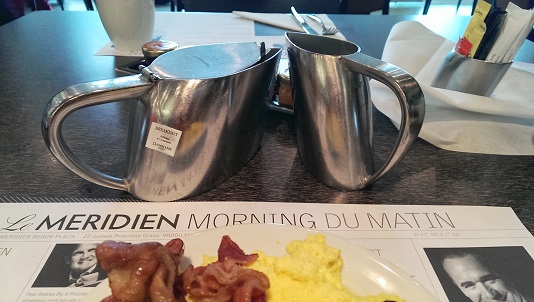
Stupid tea set, undrinkable tea

Stupid tea set, undrinkable tea

This wasn’t quite the end of my sojourn in Monte Carlo. Due to an administrative error I’d been booked out of the Fairmont a day early and had to spend my final night at the slightly less glamorous Meridien Beach Plaza down on Avenue Princesse Grace. What kind of gnarled and calloused fist, I wondered, would they make of my breakfast brew here? I was already braced for disappointment, but the reality was worse than anything I could have imagined. As I was being seated I noticed a waiter emerging from the kitchens bearing a large tray of about two dozen teapots . The pots, pre-filled with water, were destined to sit on the tray losing heat for up to half an hour before eventually being doled out to guests with a bag of tea-dust on the side. My throat tightened, the floor bucked beneath me and a familiar hot churning stirred in my gut…

Unknown's avatar

Prague Winter

Prague Castle

I have just returned from a tea trade symposium in the Czech Republic – a trip which, given my recent positive experiences in Slovenia, I was anticipating rather keenly. Sadly, the reality did not match my expectations.

The symposium itself took place in the conference facilities of the splendidly appointed Prague Hilton but, alas, my budget did not quite stretch to affording accomodation there. Instead, I was billeted five minutes walk away on the other side of a grafitti-spattered underpass in a characterful establishment called The Embassy.

Several other conference attendees were also staying there and one of them, a wiry Scot called Ben, observed that it felt a bit like a brothel. I must bow to his superior knowledge on that front, but there was certainly something rather ripe about the busty bottle-blonde who checked me in. She was either in her 40s and trying to look 25, or in her twenties and pursuing an excessively dissolute lifestyle.

As she leaned across the reception desk to hand me my key-card I actually felt a slight breeze from the fluttering of her extravagant false eyelashes, carrying on it a faint scent of vodka fumes laced with juniper.

Hilton, Prague

Hilton, Prague

One might imagine that a recently-issued TripAdvisor ‘Certificate of Excellence’ (like the one prominently displayed next to The Embassy’s lift) would indicate that the establishment to which it has been awarded offers a reasonably good standard of facilities and services. It would seem, however, that this is not the case – as indicated by the following catalogue of shortcomings:

• No in-room tea-making facilities (I was, as always, prepared for this possiblity – but it should be provided by default in any hotel room, like the Corby trouser press and Gideon bible.)

• Inadequate hot-water supply – the shower was either an intermittent scalding trickle or a torrent of glacial meltwater with nothing in between, and filling the bath to a depth sufficient for wetting more than one’s buttocks and the soles of one’s feet took several hours.

• Blast-furnace heating – the radiator was so hot that one could not approach within 3 feet of it without the skin beginning to blister, and there was no way to turn it off short of crimping the pipe with a plumber’s wrench. One night I left a pair of socks on it to dry, and in the morning no trace of them remained save for a dark smear on the wall above where they had been.

• DIY room service – after a particularly gruelling day of listening to the Russian and Chinese delegations sniping at each other I decided to spend a quiet evening in my room rather than going out on the town with the other ‘tea-heads’. I ordered a delicious-sounding risotto from the room service menu and was surprised to learn that I would have to go down to reception to fetch it – something of an inconvenience as by then I had already changed into my dressing-gown and night time support briefs.

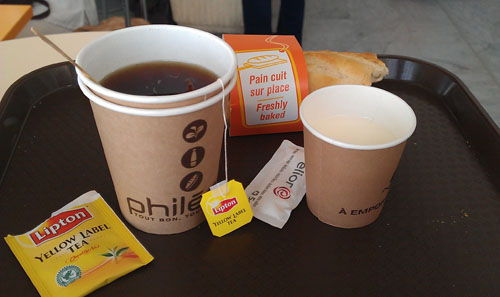
• Inconsistent breakfast provision – the one constant feature of the cooked breakfast offerings was lengths of chewy sausage like chunks of fat pepperami still in the plastic sheath. On the first day this was accompanied by a rather delicious offering of lightly sautéed potatoes in a creamy, herb-infused sauce. I sought out this tasty treat on the second day only to find that it had been replaced with penne in spicy tomato paste, then mushy vegetable rice, and on day four, mystifyingly, bread pudding. The ‘orange juice’ was of the same quality and freshness that astronauts on the first manned trip to Mars will be enjoying and the tea came out of a Liptons assortment box in which the most palatable option was, yes, Yellow Label.

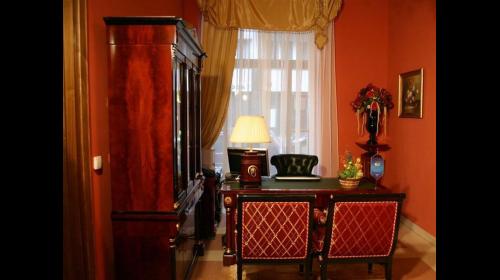
Lobby, Embassy Hotel, Prague

Lobby, Embassy Hotel, Prague

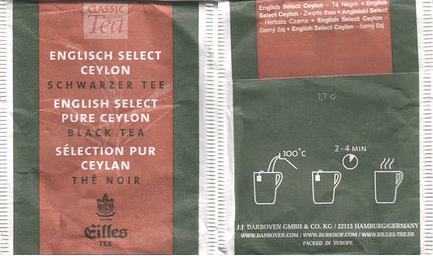
Bitter experience has taught me that breakfast tea in mid-priced continental hotels (aside from those in Germany) will seldom amount to anything worthwhile so, while I was disappointed by The Embassy’s efforts, I was hardly surprised. What did surprise me was the poor fist that the Hilton had made of providing tea for the 130 or so trade representatives attending the symposium. Where one might have expected – as is usual at this sort of event – a selection of fine leaves from the world’s most celebrated tea gardens served in bone china pots, there was instead a shallow basket of assorted sachets, many containing tealess herbal infusions, alongside a large Burco-style urn of thoroughly deoxygenated hot water. The tea, (what little there was) was German in origin, but of the rather second-rate Eilles brand whose marketing people were clearly of the opinion that any kind of black tea can be given a quality makeover by labelling it as ‘English’.

English Ceylon

To be honest, I could not understand how or why the Hilton had screwed things up so badly until I learned that the Russian organizers had arrived a few days early and blown almost the entire refreshment budget on Czech hookers. Typical.

As for the symposium itself, I did take a few notes but there was nothing of sufficent intrest to merit reporting here.

This is probably my last post before the festive season begins in earnest, so I’d like to offer all my readers a generous slice of seasonal good cheer washed down with a steaming mug of M&S Winter Spiced Tea. Pip-pip!

Unknown's avatar

Eastern Promise

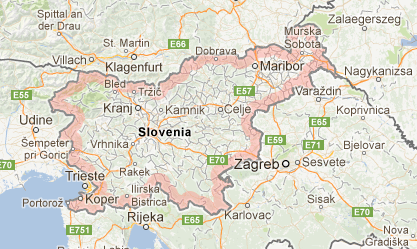
© Google Maps

© Google Maps

Back in the 1970s when I was learning Geography at school there were only nine countries in mainland Europe – France, Germany, Holland, Belgium, Switzerland, Austria, Spain, Italy and Luxembourg. Each had its own easily-recognisable national characteristic – smelly cheese, clogs, chocolates, cuckoo-clocks, genocide and so on – with the exception of Luxembourg. No-one even knew where Luxembourg was, although it was generally imagined to be quite distant judging by the feebleness of the signal from its one and only radio station.

Nowadays there’s an ever-growing multitude of European nations – more than a hundred if the Eurovision Song Contest is anything to go by – and I freely admit that I had to reach for my gazetteer when I received an unexpected tip-off from a reader in Slovenia. (It’s just south of Austria, if you’re curious.) The young border town of Nova Gorica was the location, and I was was surprised to discover that half of it lies in Italy, where it’s called Gorizia. Readers of my report from Sanremo earlier in the year will understand why this set more than a few alarm bells ringing. Mere proximity, however, is no reason to tar the good people of Slovenia with the Italian brush so, with a weekend in hand, I packed my valise and headed east.

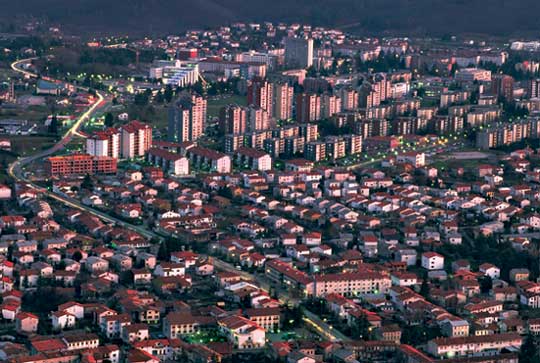
Nova Gorica

Nova Gorica – A sort of Slavic Peterborough

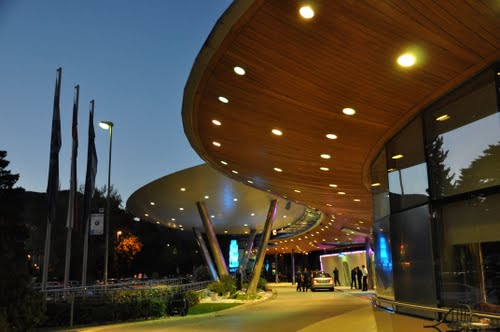
The first thing one notices about Nova Gorica is that there’s a casino on virtually every street corner, but that’s where the similarities with Las Vegas end. Nondescript residential and business zones, clusters of Soviet-era housing blocks and a Brutalist shopping centre complete a provincial townscape conspicuously lacking in glamour or razzamatazz. Most of the casinos look like somewhere you’d go to get your car serviced, but the Perla Hotel and Casino, situated in the centre of the town, exudes a modest degree of swank, with entrances done out in an exuberant nautical style, perhaps to give punters the impression that they are boarding an exotic cruise liner.  This, unlikely as it seemed, was the destination to which my correspondent had sent me – and there, to the right of the lobby, lurking behind a row of glass cases filled with gaudy souvenirs just as he had described, I found the Kaffè Dolce Vita.

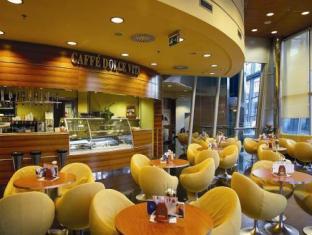
Kaffè Dolce Vita (it's usually busier than this)

It’s usually busier than this

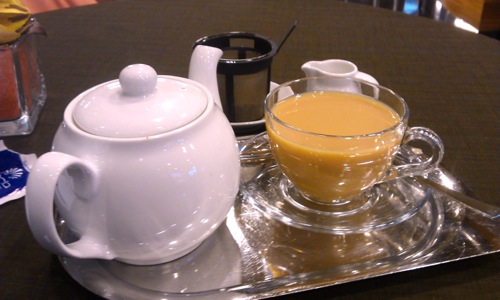
Nestled in a crescent-shaped space hugging the outer wall of the hotel, the café has a moderately cosy atmosphere despite a preponderance of glass and stainless steel, and as I entered I was welcomed by a winning smile from a statuesque blonde waitress with a slight stoop and an interesting nose. I always start with a pot of English Breakfast Tea when breaking new ground. It’s not a mathematically precise standard, but there are certain boxes that should be ticked – robust, earthy flavour; rich, dark colour, and plenty of Assam in the blend. It’s surprising how far short of these benchmarks some ‘English Breakfast’ varieties fall. On a visit to Connecticut last year I was confounded by a brew composed entirely of smoked Chinese leaves – the only connection with English breakfast I could discern was that it smelled like kippers and after just one mouthful I had to gargle with grapefruit juice to get rid of the taste. Fortunately, there were no doubts about the quality of the tea at the Dolce Vita as it was supplied by Ronnefeldt, a German importer and blender with impeccable credentials. The question was, would the waitress do it justice? I watched with some satisfaction as she confidently spooned a measure of loose leaf into a mesh basket, dropped it into a pre-heated porcelain pot and sluiced the contents with demonstrably boiling water. I forgave her for offering me a choice of milk or lemon (only people with severe lactose intolerance issues should consider taking EBT without milk) and carefully carried the small oval silver tray to my table.

Dolce Vita Tea

Satisfaction guaranteed

After such conscientious preparation the tea was hardly going to disappoint, and sure enough it set my taste-buds dancing and singing with delight from the very first sip. The truly remarkable discovery came when I went to pay for it and found that the total bill, including a generous slice of apple strudel, came to only €3.60 – about the same as you’d pay for a cardboard bucket of swill and soggy flapjack at the Upper Crust concession on Paddington Station. Realising that my tea budget would go significantly further than I had anticipated I greedily scanned the dozen or so other varieties on offer behind the counter and picked out a fine Darjeeling for my next pot – this time with a wedge of lemon.

With two days to fill I had planned sight-seeing trips to the Karst caves and Triglav National Park, but after the fourth pot I was feeling excessively relaxed and the weather was dreadful so, taking a necessary break from my libations, I wandered into the gaming area of the Casino. The customers, as far as I could tell, were predominantly Italian and mostly over 50, although there were quite a few young men with bouffant hair and unfeasibly tight trousers gliding up and down between the banks of slot machines, probably on the lookout for lonely widows having a flutter with the life insurance payout. The agents of fortune were on my side that day, and after half an hour of pulling levers and pressing buttons I had increased my original modest stake tenfold. Feeling flush, I graduated to the roulette tables where, in fairly short order, I bagged enough moolah to cover the entire cost of my Slovenian jaunt. That seemed like a good point at which to count my chickens, so I cashed my chips and returned to the Dolce Vita for a celebratory pot of sweet-smelling Ceylon. I was there again when the doors opened on the morrow and while the rain lashed down outside I spent a gloriously lazy day filling myself with tea and pastries and reading my hardback copy of The Hydrogen Sonata. It’s hardly the stuff that travelogues are made of, but by the time I retired to bed I felt as if I had lived the life of Bacchus.

A big hvala then, to Mr Marius Kovska for drawing my attention to this exemplary establishment. It’s clear that Slovenia has much to offer for the curious traveller and I fully intend to return for a longer stay when the weather has improved so that I can discover more about this overlooked corner of the new Europe.

Perla Hotel and Casino

I’ll be back…

Unknown's avatar

Chilling in Seville

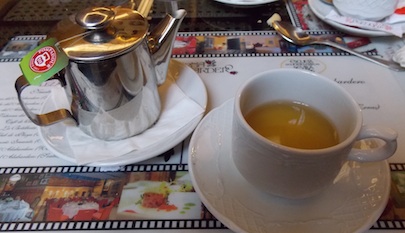
Green tea in Seville

English Breakfast Tea – Seville Style

One thing that can never be said of the international tea business is that it’s dull or predictable. For several months now, I’ve been intimately involved with a couple of hush-hush BTC trade missions that have taken me from the snow-capped mountain fastnesses of Switzerland to the steamy vice-dens of Macau – with a few touches of Bond-style intrigue thrown in along the way. Contractual and legal restrictions prevent me from giving any further details at present, except to say that by the end of it all I was sorely in need of a break.

Those familiar with my views on Spain will be agog at the news that my chosen leisure destination was Seville. This was not the random act of masochism that it might at first seem, for I had been tipped off about a little place of particular interest in the city’s Macarena district (from whence, one imagines, the eponymous floor-filling disco-dance hit originated). It’s a depressing fact that throughout Spain – and particularly in the south – genuine tea enthusiasts are forced into a way of life reminiscent of Jewish Conversos during the Inquisition. In public they dutifully swill thick coffee, corrosive sherry and cheap beer along with their friends and countrymen, but behind closed doors the bone-china pots and fragrant single-estate Darjeeling emerge from hidden compartments under the floorboards and tea is taken with thin-cut crustless sandwiches, buttered scones and malted milk biscuits.

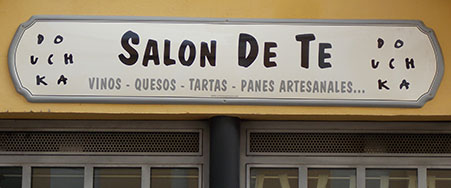
Douchka

An oasis in the wilderness

The Salón De Té Douchka, on the calle San Luis is one of a tiny handful of semi-underground places where these defiant té-pistas can conduct their rituals and indulge their passions in public, among their own kind and, for the most part, without fear of violence. It was something I had to experience.

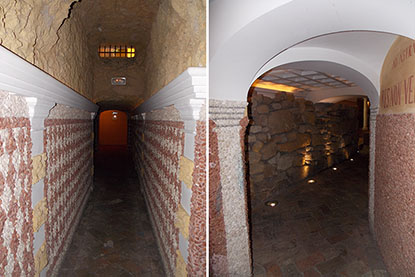
My flight landed too late to seek out this shrine to the true leaf on the day of arrival, so I busied myself setting up my travelling tea-station in the hotel room and perusing a pocket guide to other local attractions. The hotel itself was enchanting, occupying a warren of ancient houses arranged around sunken inner courtyards linked by underground passageways. Fittingly, this had once been the last secret holdout of the Sevillian Jewish community in the dark days of the 16th century, before they were slaughtered or assimilated. I sampled the house tea in the WiFi lounge before retiring to bed, and was predictably underwhelmed.

Las Casas de la Juderia

Which way to breakfast?

The tea on offer in the subterranean breakfast room the following morning was no better – significantly worse in fact – and I elected not to soil my palate with it before setting off to investigate the anticipated pleasures lying in wait for me at the Douchka. Imagine, then, my disappointment on finding the establishment closed. I was not immediately alarmed. Spanish opening hours are a complete mystery to me and I assumed that I had simply got my timing wrong. I unfolded my list of non-tea-related things to do and strolled through the sunlit cobbled streets of the old town, making my way to the Cathedral. I was eager to see its famous central altarpiece, a spectacular gothic retablo carved with numerous intricately detailed bible scenes and dripping with Conquistador gold – but once again, disappointment reared its head. The entire edifice was shrouded with plastic tarpaulins, and although the signs claimed it was being restored, I learned from an unofficial source that the gold is being stripped out to pay off the Germans, and will be replaced with metallic car paint.

The Douchka was still shuttered and dark when I returned that afternoon, and again the following day. While I was peering forlornly through the dusty slats an elderly couple emerged from the building next door and turned in my direction. “Buena tarde, señor y señora.” I offered in my best Google Spanish.  “¿Cuándo es el salón de té abierto?”

At least, I think that’s what I said, but their reaction suggested that I might have accidentally offered to gut them with a filleting knife and hang them by their entrails from the Torre de los Perdegones. The old man pointed a trembling finger in my direction, croaked something that sounded like “¡No hay té!” and dragged his wife (as I assumed the lady to be) back inside before I could reassure them. I tried asking the same question in local shops and bars, where reactions ranged from surly incomprehension to outright hostility, and I’m sorry to report that the Douchka remained resolutely barred and bolted for the remainder of my stay.

It would be ridiculous to conclude from such scant evidence that the Douchka’s proprietor has been dragged away in the dead of night and tossed into a dungeon under the Alcazar Palace where he’s being ‘persuaded’ to renounce the way of tea by men in pointed white hoods. He’s probably just on holiday or something – I’m sure that’s all it is – but this is Spain and old habits die hard, so if any readers find themselves in Seville during the coming months, please take a stroll down the calle San Luis and let me know if there are any signs of activity at No. 46.

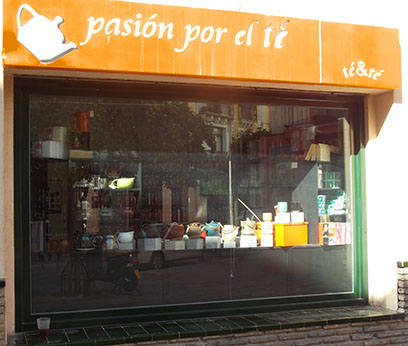
Despite this setback the trip was not entirely wasted. While wandering aimlessly through the Casco antiguo district on my final day, I stumbled across something rather extraordinary  nestled amongst the tapas bars and tourist boutiques. The sign above the heavily reinforced door said Pasión por el Té and, remarkably, it was open for business. As I stepped inside I was filled with a sense of awe and wonder that had been conspicuously absent during my trip to the cathedral. Here was a tea shop with breathtaking purity and clarity of purpose. Shelf after shelf of neatly hand-labelled foil packets containing rare treasures from the world’s most celebrated tea gardens lined the walls, gleaming in the soft light. I’m not ashamed to admit that I was quite overcome. The owner, a personable young fellow called Ignacio with a decent grasp on the English language, was kind enough to offer me a chair, and when I had recovered my composure we traded tea-stories for a pleasant half-hour or so while a Holy Day procession snaked noisily by outside. Before I left, laden down with truly self-indulgent quantities of fine leaf, I commended him for his dedication and bravery. With a wry chuckle he told me that he wasn’t so brave and showed me the panic room behind the counter.

Pasion Por El Te

The Pasión and the Glory

It’s shameful that an honest trader has to take such extreme measures to protect his life and livelihood in what is supposed to be a modern democratic country, and I have written a stiff letter expressing my concerns about the matter to Nils Muižnieks, the European Commisioner for Human Rights. I urge all my readers to do the same.

It belatedly occurs to me, as I sit at home writing these words and enjoying a pot of finest Pasión por el Té Chamray Nilgiri, that I should have asked Ignacio about the Douchka. The té-pistas of Seville are a very close-knit community and if anyone was going to know what had really gone down, he was the hombre.

Unknown's avatar

The Italian Job

Image

As a general rule, the further south one travels in Europe, the less rosy the tea prospects become. I would never go to Spain, for example, without packing a full brewing kit, as I have learned through bitter experience that hotel rooms there often lack even basic water-heating apparatus. There are, of course, isolated British-occupied enclaves where this is not the case, but away from the cosy Costas the tea situation is as arid as the parched hills around Madrid.

It pains me to report that the situation is even worse in Italy if the evidence of my recent visit to the northern coastal resort of Sanremo is anything to go by. Having hired a spacious charabanc at Nice airport, I proceeded along the old Riviera coast road through Monte Carlo (which was bustling with preparations for the Grand Prix – I was thrilled to find myself suddenly swinging around the iconic ‘Loews Hairpin’ corner, the scene of Lewis Hamilton’s climactic tussle with Felipe Massa in the 2011 event, but I digress…).
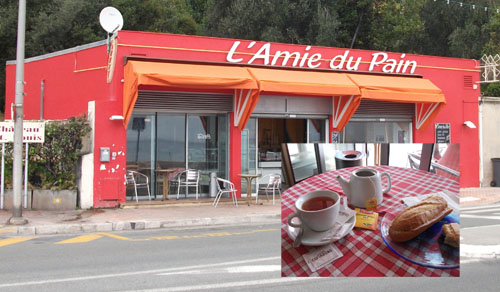
Half a kilometre from the Italian border I stopped off for a quick refresher at what is probably the Riviera’s least pretentious café, where I enjoyed a simple baguette and a pot of the ubiquitous Lipton’s Yellow Label. It was serviceable enough by French standards, and I would have cherished it a great deal more had I any inkling of the ordeal that awaited me on the other side of the border.

There is a distinct change as one passes from the French to the Italian Riviera. The new buildings are uglier, the old buildings grubbier and more dilapidated, the palm trees less healthy.

Battling my way through cantankerous and unpredictable traffic, I missed the concealed turn-off to the Sanremo Hotel Nazionale and found myself negotiating a tangled maze of steep, narrow back-streets. Judiciously pulling over to let a bullish delivery truck pass, I neatly sheared the front number-plate off an Audi that was protruding somewhat from its parking bay at the base of a run-down apartment block. The alarm went off and a hairy woman with flailing arms appeared on the fifth floor balcony; shortly thereafter, she emerged onto the pavement with her spouse, a Hungarian immigrant whose Italian was no better than mine and English non-existent. I’m not one of those misguided souls who expect every Johnny Foreigner to understand the Queen’s English, but under these multi-lingual circumstances our respective French and Italian accident forms took an unfeasibly long time to complete.

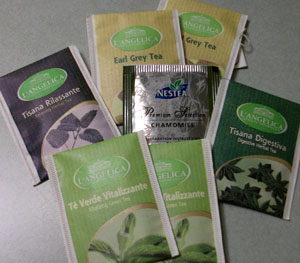
As you may imagine, this stressful experience left me in dire, almost pathological need of a restorative cup of tea, so when I arrived, finally, at my hotel room I was heartily relieved to find that a kettle had been provided, along with an assortment of what looked like fairly standard one-cup tea sachets. On closer inspection, however, it turned out that only two of the varieties on offer actually contained tea, contaminated beyond use in both cases with various additives. I know that Earl Grey has its apologists, but if I wanted to drink tea that tastes like suntan lotion, I could brew up a cup of Tesco Value and squirt some Ambre Solaire into it.
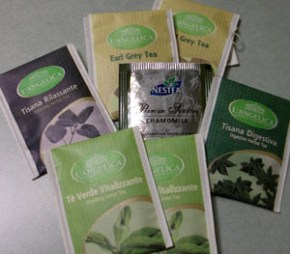
Image

I had, of course, packed my own supply and was soon calming my nerves with a delicious serving of M&S Luxury Gold.

The first indication that I had stumbled into hostile territory came a little later when I was taking dinner in the hotel restaurant. I had chosen the reasonably priced and rather moreish ‘Tourista’ set menu, which included a cup of c*ffee as standard. As is my custom in these situations, I politely requested that the default offering be substituted with a pot of tea. The waiter flared his nostrils disdainfully, and with a toss of the head frostily informed me that it was c*ffee or nothing before mincing away to serve another table.

Suffice it to say that I did not leave a generous tip.

Image

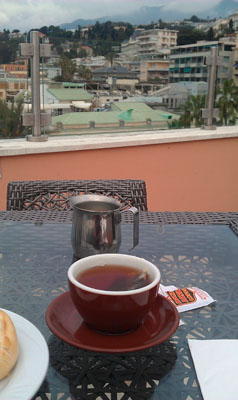
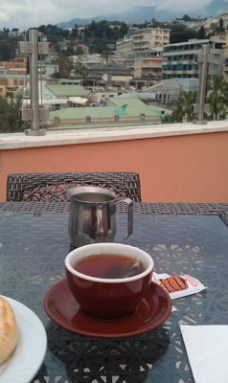
Breakfast was hardly an improvement. The setting was glorious – an al fresco rooftop terrace overlooking the town – but the tea on offer was criminally lacking. The kitchen staff were plainly aware that there is a drink called tea that involves dipping dried leaves in hot water, and that some guests might want to enjoy a cup of this mysterious beverage with their potato omelettes and cured ham, but that’s where their understanding stopped. The quality of the leaf was dismal, and the hot water was the wrong side of 80ºC by a significant margin. The resulting tepid slop cried out to be tossed over the balcony into the streets below, and I was forced to return to my room where I brewed a fine cup of piping hot Bewlay’s Irish Breakfast with which to resume my seat on the terrace.

I’m glad that I did, for it was to be my last taste of tea for a gruelling thirteen hours…

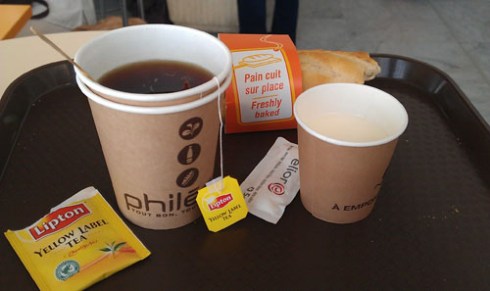
I had a number of promotional duties to perform on behalf of my funding body, The British Tea Council, which started with handing out sample packs of selected British blends to a locally sourced distribution team. As soon as Roberto, Luigi, Stefano and Dirk had been dispatched with their precious offerings, I embarked on a tour of local businesses to espouse the benefits of making tea available in the workplace. Every establishment I went to seemed to have a wheezing, chrome-plated monstrosity capable of retching up a dozen different types of c*ffee, but no kettle, and I was kicking myself for not having taken my trusty Russell Hobbs with me. Rookie error, frankly. By mid afternoon, having drunk only water since leaving the hotel, I was starting to feel discommoded and slightly fretful. In desperation I darted into a grocery store between appointments, intending to purchase several litres of bottled ‘Iced Tea’ (my usual fallback when the fresh option is unavailable). All they had was a solitary, dust shrouded 50cl bottle of Liptons Peach Flavoured, which is a poor option at the best of times as it tends to make your tongue feel like a woollen sports-sock. This particular specimen was more than two years past its best before date and had little thready things floating around in it so, with heavy heart I returned it to the back of the shelf. Things were not quite that bad – yet.

The rest of the afternoon remained resolutely tealess and the only thing that kept me going was the thought of the personal treasures waiting for me by the kettle in my hotel room. But first there was one more duty to fulfil – I had arranged to take Roberto and my other distributors to dinner as a gesture of thanks for their hard work. We retired to a pleasant-seeming restaurant in a side street to the left of the Casino dí Sanremo where my guests ordered huge quantities of food, mainly slabs of extremely rare steak served on a thin bed of lettuce leaves. I raced my way through a lightly-topped pizza, brushed aside the dessert menu and with great anticipation asked the friendly and attractive waitress for a pot of tea. She laughed in my face. Not a cruel laugh, not derisive, just a peal of simple merriment at the sheer ridiculousness of my request.

I suppose it was one of those ‘not in Kansas anymore’ moments. I stood up in a sort of daze, made my excuses, bade my farewells, settled the surprisingly large bill and staggered out into the night.
Image

The rest of my stay in Sanremo is something of a blur, shrouded in a trauma-induced mental fog that did not lift until I ordered a cup of tea in the departures lounge at Nice airport and was treated like a normal human being – but not before enduring one final slap in the face. On my last morning in that godforsaken Italian hole I took a brisk walk along the esplanade that runs westward out of the town centre and discovered the entire stock of samples that I had entrusted to Roberto and his cohorts piled up in a builder’s skip.

I sincerely hope that my experiences in Sanremo are not symptomatic of the state of tea in Italy as a whole, but until I have conducted further investigations I must advise British visitors to that country to proceed with extreme caution – or even better, to go somewhere else entirely. Germany, perhaps.

Unknown's avatar

Release the Leaf

Release the Leaf

When did you last see a television advertisement for loose tea? If you’re under 45, the answer is probably never. The multinationals behind our mass-market brands are eager to promote the bagged variety – which allows them to charge more for less, both in terms of quantity and quality – and they’ve laboured hard to convince us all that the loose option is somehow ‘difficult’, ‘messy’ and ‘fetishistic’.

For a generation reared entirely on tea wrapped in modified nappy liners the prospect of ‘going commando’ can be daunting, but with a little forethought and the right equipment, making the switch from bagged to loose tea can be as easy, liberating and hassle-free as switching from PC to Mac.

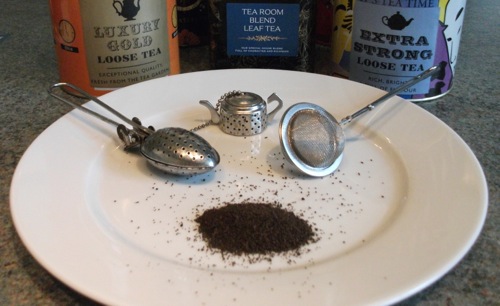
The first principle of loose tea management is to store it in an appropriate container, ideally one with a wide opening for easy access. Attempting to spoon it into the pot directly from a crumpled foil packet will invariably have you reaching for the dustpan and brush.

While the kettle is coming to the boil, you may want to decant the desired quantity of leaf into a separate vessel – a small tumbler or the like – so that it can be tipped into the pot without fuss or prevarication. This will be an essential step if you have a medical condition that causes significant hand tremors.

Give the tea a brisk stir, let it stand, then stir again before pouring – through a fine mesh strainer if you prefer your brew without the juicy bits.

Now comes the best part: drinking the tea. Let’s take a moment or two to enjoy that full, rich, unfettered flavour…

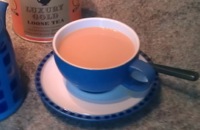
Great Cuppa

Ahh! Tea as it is meant to be. I think there’s a drop more in the pot. Let’s do that again…

Great Cuppa

Splendid. Where were we? Oh yes…

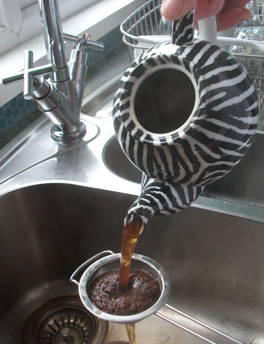
The issue of disposal is where many novice ‘leafers come unstuck. Attempting to scoop out the warm, soggy residue with your fingers will not take you to a pleasant place, and washing it down the sink will invariably have you reaching for the plunger. A better solution is to simply use your strainer as illustrated below.

Leaf disposal

Douse the used leaves with tap water and pour in short bursts, tipping the pot back and forth to prevent the leaves from settling and clogging the spout. Then simply tap the contents of the strainer into the green plastic basket (or similar) that your local council has provided for food waste, and you’re good to go.

Even if you like it quick’n’dirty (as we all do from time to time), loose leaf can easily trump lobbing a dust-filled bag into a soiled mug. Simply load up a one-cup infuser with M&S Extra Strong, slop some hot water and UHT milk over it, and I guarantee you’ll feel sleazy for hours.

The Tea Caddy