Unknown's avatar

Got Your ‘Bak

Product review:

Camelbak Forge Vacuum Insulated Travel Mug
Regular readers will know the trouble I’ve had tracking down a decent cuppa in the southern latitudes of Europe. For the serious tea enthusiast, it would be an act of madness to visit any EU country that lies wholly or partly below the 45th parallel without packing a travel kettle and a large caddy of quality leaf. Thus equipped, you can at least ensure that your away days will be bookended with a satisfying brew. 

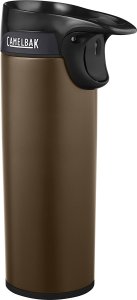
That still leaves the problem of what to do when you are out and about during the day. I mentioned this to my niece, who spends much of her spare time hiking and biking in the great outdoors, and she suggested, without hesitation, that I should get myself a Camelbak. It’s an Australian brand with a solid reputation amongst the Ray Mears set, and there were plenty of their wares on display at my local branch of Go Outdoors. I plumped for the pricier end of the range, shelling out £30 and change for the model illustrated above. Aside from the excellent build quality, its headline feature is an ingenious spring-loaded seal, enabling the contents to be enjoyed without the need to faff around with a screw-top lid or suck on a teat. I immediately put it to the test with a trip to the Italian Grand Prix where it ended up facing a far sterner challenge than anything I had envisaged.

Hotels near the circuit in Monza were charging outrageously inflated rates, so I booked myself and my young travelling companion, Huw, into a more reasonably-priced establishment just a few hundred yards behind the central station in the heart of nearby Milan.
Uptown

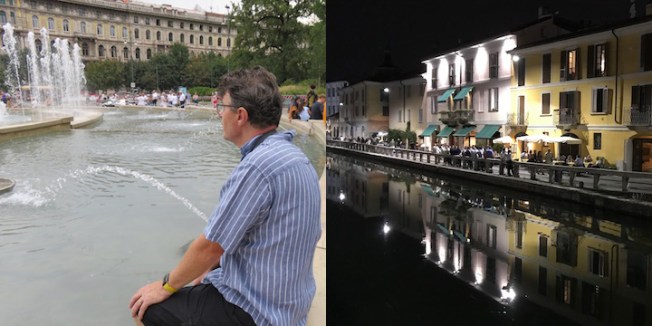
The sprawling capital of Lombardy, we discovered, is a city of two halves, separated by a line running perpendicular to the rail terminus. Out front, broad piazzas, grand apartment buildings and luxury retail outlets; to the rear, grimy flophouses and 24-hour kebab shops. That first walk from the station to the hotel, trundling our cases through a grid of pot-holed, poorly lit streets watched by groups of shifty-eyed men lurking in doorways, seemed to take an uncomfortably long time. Fortunately, we were not the only race-goers staying in that part of town, and there were several others beating a similar path.
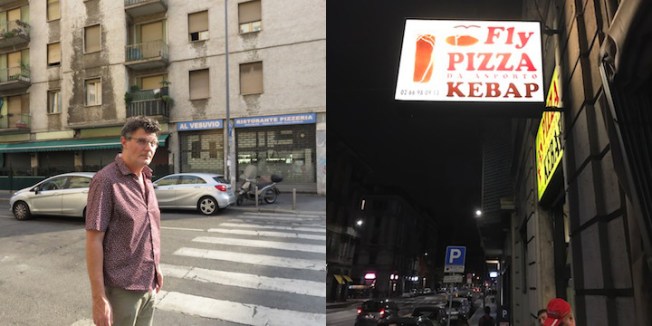
Downtown

The next morning I filled my new tea-vessel with robust full-leaf Assam and stowed it in my backpack, intending to leave the contents undisturbed until I had taken my seat at the track. Travel time from hotel to circuit was around 80 minutes, comprising a half-hour train journey, a tightly-packed bus ride and a lengthy march through the extensive lawns and woodlands of the vast Parco di Monza. I estimated that getting past the security scrum and locating our stand was going to take at least another 40 minutes. So, I wondered, was my brew going to pass muster after two hours ‘in the can’?
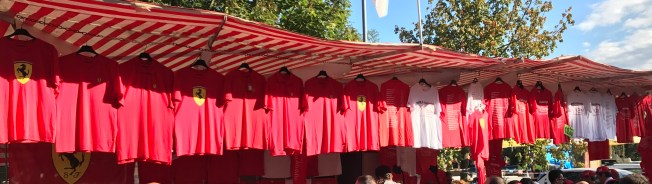
Red Brigade

That question remained unanswered because – as Huw and I belatedly found out when we reached the cordon of heavily armed Carabinieri at the entry checkpoint – no metal or glass drinks containers of any kind were being allowed into the circuit. Great heaving mounds of confiscated cans and bottles were building up on either side of the barriers, and I can assure you, dear reader, that my expensive new flask was not about to join them. The obvious solution was to double back 50 yards or so and find somewhere to stash it in the woods. Feeling disinclined to share this somewhat undignified plan with the glowering, sweaty-browed officers barring my way, I smiled politely and told them I would take the offending item ‘back to my car’.

My confident assumption that Huw would back me up in this mild deception proved to be tragically wrong.

“We haven’t got a car!” he squeaked in a sort of strangled falsetto. His face was tinged a sickly shade of green, his head pulled so low to his shoulders that his chin was virtually embedded in his chest. The poor, dear boy. I had forgotten how agitated he becomes in the presence of firearms. Even the sight of a potato gun is enough to give him the collywobbles. Not that I was feeling sympathetic right at that moment.

“Yes we have” I hissed urgently, “and I’m going to take this flask back to the car park and leave it in the car!

“We haven’t got a car!” he bleated again, more loudly this time, his gaze mortally transfixed by the carabinieri’s gleaming instruments of death. 

It could have been a sticky moment, but I’m happy to report that we were not summarily dragged away and tossed into a barbed wire holding pen. Thanks to Huw’s bracingly strong Valleys accent, the Italians had not had the faintest idea what he was actually saying.
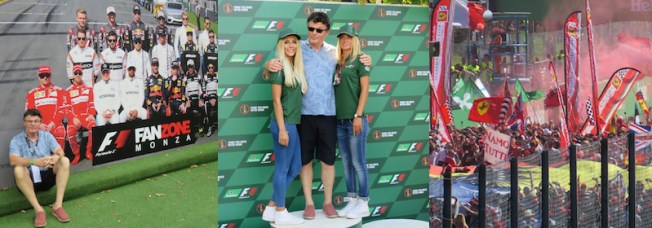
Trackside

The race action that day was a tad predictable but the hordes of cheering, red-shirted Tifosi crowding the stands made for a lively atmosphere. Tea was on sale nowhere, so I had to keep myself topped up with the powdered variety in capsule form. This is rather like using nicotine patches, in that it satisfies a base need without actually giving any pleasure.

After the session, when I returned to the distinctively gnarled tree behind which I had concealed the flask, my only hope was that it would still be there. I had no expectations regarding the contents and was amazed and delighted to find that the liquid within was, after almost eight hours, still of good flavour and palatably warm. It was a far more satisfying result than anything that had happened on the track.
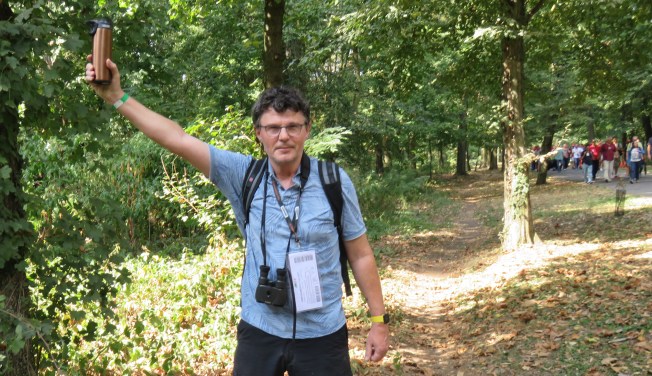
Reunited!

Since then, my Camelbak Forge has seldom strayed far from my side. It regularly accompanies me on dog walks, bus rides and visits to the cinema, and never disappoints. Heartily recommended.
Unknown's avatar

Curse of the Medusa

A cautionary tale

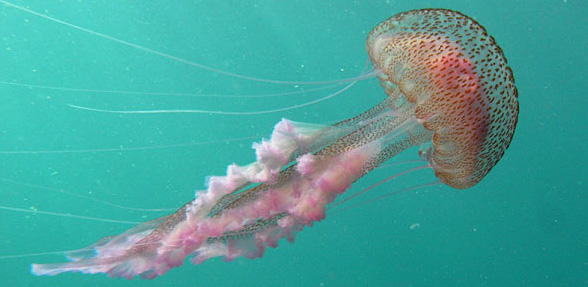
Pelagia noctiluca

Pelagia noctiluca, colloquially known as the ‘mauve stinger’

No one had warned me about the jellyfish. Not the Dorling Kindersley regional guide, not the resort brochure, not the holiday rep; none of them had breathed a word about the monstrous blooms of Pelagia noctiluca currently blighting the northern reaches of the Mediterranean. It was, therefore, entirely without trepidation that I plunged into the warm, clear waters off the Côte d’Azure on that fateful morning in late July.

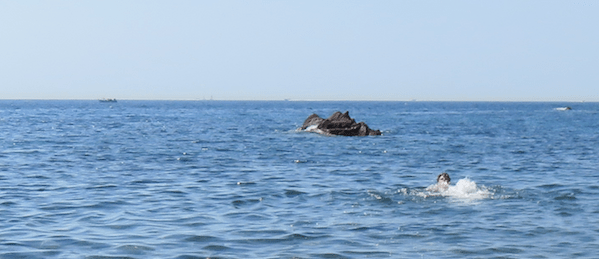
Mrs Tea and I had discovered an unoccupied beach along the rugged patch of coastline at the foothills of the Massif de l’Esterel, midway between St Tropez and Cannes. The sea was a little choppy after the previous night’s storm, but nothing too challenging, and I had set my sights on a rocky outcrop about 150 yards offshore, tragically unaware of the malignant forces lurking beneath the sparkling wavelets and wholly unprepared for the hellish ordeal that lay ahead.

Swimming

What could possibly go wrong?

The little beach looked satisfyingly distant when I clambered triumphantly onto the rock and turned back to wave reassuringly at Mrs Tea. From my new vantage point I could see other beaches, separated by jagged buttresses thrusting out from the rust-red cliffs: to the left, another pebble-filled cove, occupied by a brace of orange canoes and their owners; to the right a much larger and more populous beach with a decent stretch of sand, beach balls, brightly-coloured buckets, families playing. This, I decided, would be my next destination.

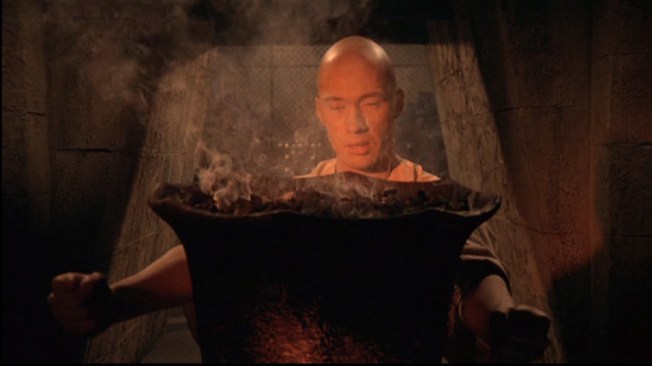
I had covered about half the distance when the nightmare began. Without warning, an explosion of searing pain ripped through my left arm, effectively disabling it. There is a scene in the TV series, Kung Fu, where David Carradine lifts a red hot urn filled with burning coals by clamping it between his naked forearms. Flesh sizzles. Acrid smoke plumes from burning skin. That’s pretty much exactly what it felt like. The safe haven of the shore seemed suddenly very far away. Fearfully scanning the bobbing waves I soldiered on, struggling not to swim in circles like a broken wind-up bath toy.

Grasshopper gets burned

Don’t try this at home

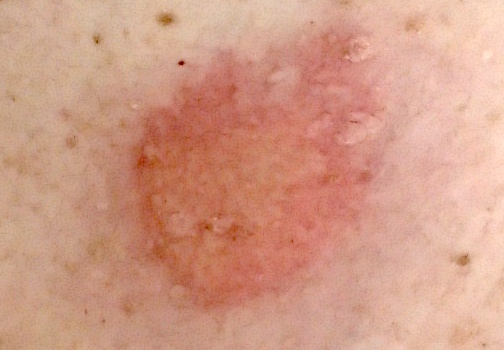
Subsequent research has taught me that the venom produced by Pelagia noctiluca ranks quite highly on the standard indices of pain and toxicity – I can attest to this, because that first strike turned out to be a mere aperitif. I had managed only a few strokes before a veritable apocalypse of agony tore into my abdomen. The pain was beyond description. My vision blurred and a montage of harrowing scenes from The Passion of the Christ looped feverishly through my mind. Thrashing desperately, I somehow made it back to dry land without further injury, and when I finally stumbled up onto the sandy beach, twitching and cursing like a chronic Tourettes sufferer, a man standing at the water’s edge tutted and pointed knowingly at the livid, palm-sized weal on the side of my stomach. “La Medusa”, he intoned solemnly.

Jellyfish wound

One week later

Pelagia noctiluca delivers its venom by firing fusillades of tiny, toxin-filled hypodermic darts at anything that comes into contact with it. They penetrate the skin, continuing to pump out poison for days, even weeks afterwards. But for all its ferocity, this formidable biological weaponry is only effective over a very limited range. A single layer of fabric is generally enough to shield the wearer from harm. I could have protected myself, if only I had been warned. Instead, I spent the rest of that day whimpering pathetically and feeling about as comfortable as Leonardo DiCaprio after the bear attack in The Revenant.

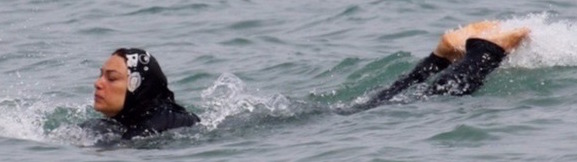
So, to any readers who are visiting the south of France and fancy a swim in the sea, my advice is this: you need to wear a burkini.

burkini

Full face-mask plus rubber gloves and footwear also recommended

Unknown's avatar

Separation Anxiety

I’m thinking of getting myself one of those personal attack alarms, something ear-splittingly loud, preferably with a fit-inducing strobe-light attachment and pepper spray dispenser. I intend to deploy it next time I order a pot of tea and receive instead a pot of water with a teabag on the side.

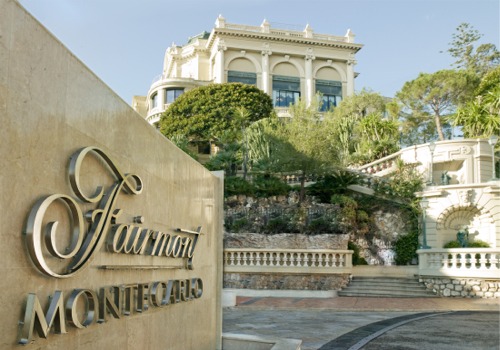
This spectacularly self-defeating practice is something I first encountered in Canada about 10 years ago. At the time I thought it a one-off piece of colonial lunacy but the ghastly habit seems to have become endemic, even in places that ought to know better. Take, for example, the iconic Monte Carlo Fairmont. Earlier in the year I found myself billeted at this breathtakingly expensive establishment during the run-up to the Monaco Grand Prix whilst serving as technical consultant on a documentary about tea habits of the rich and famous. It was here that I very nearly came to blows with a severely inebriated Chris Evans during a heated (and, on his side, woefully misinformed) discussion about the relative health benefits of tea and coffee… but that’s a tale for another time.

The Fairmont

The Fairmont

The Monte Carlo gig was supposed to be a relaxed affair, a gentle return to active duty after my near-fatal jet ski accident at the TCA (Tea Convention of the Americas) back in January. I was not quite fully recovered from the head trauma, but my meds were keeping the hallucinations and dizzy spells in check, and it was good to be out and about again.

Breakfast at the Fairmont is taken on a rooftop terrace overlooking the bay. There’s a mouthwatering spread on offer including made-to-order crêpes filled with whatever you fancy, and I loaded my plates generously before taking a seat in the warm May morning sunshine. Fine food, freshly-squeezed pampelmousse, a light sea breeze ruffling my hair – everything seemed picture-book perfect right up until the moment when my pot of tea arrived. Or rather, pot of water with a teabag on the side.

No blisters here

No blisters here

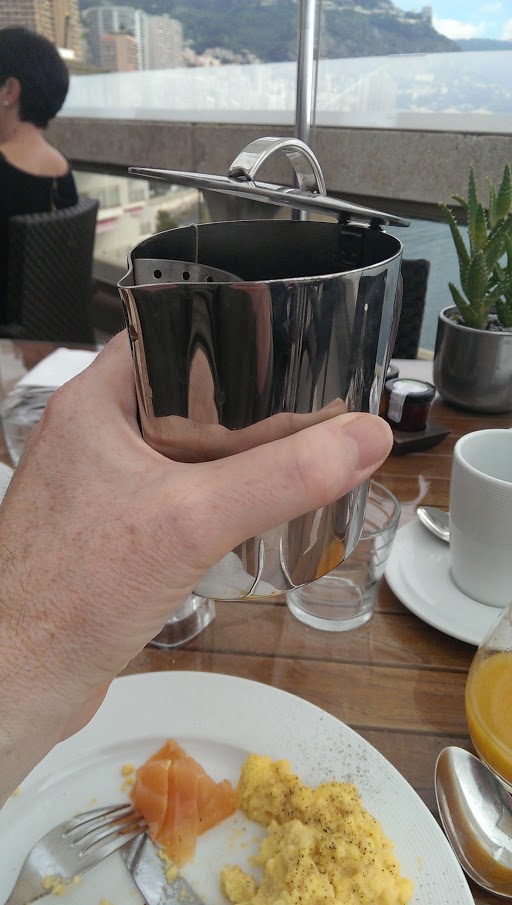
Remaining calm, I called back the garçon who’d delivered this abomination and gave him my standard mini-lecture on the basic principles of tea-making. He duly brought a second pot containing two bags, pre-immersed as requested, but had clearly misunderstood the part about using freshly boiled water. I am not especially heat resistant, yet I was able to grasp the metal body of the pot and raise it from the table without a whisper of discomfort. I held it aloft, perhaps a tad more theatrically than was strictly necessary, and asked Henri-Pierre why my hand was not consequently covered in blisters and wracked with searing pain. He shrugged disconsolately and told me that he could not ‘make the boiling’ because the water came from a machine.

This shocking revelation was altogether too much for my still-fragile cerebellum. The floor seemed to pitch and roll like the deck of a storm-tossed galleon – a sudden wave of hot nausea sent me lurching clumsily towards the edge of the terrace, barging tables and chairs aside. All around me faces turned, tanned skin melting away to reveal leering, gaudily painted skulls. Fearful and disorientated, I made a desperate lunge for the railings and vomited extravagantly onto the balconies below.

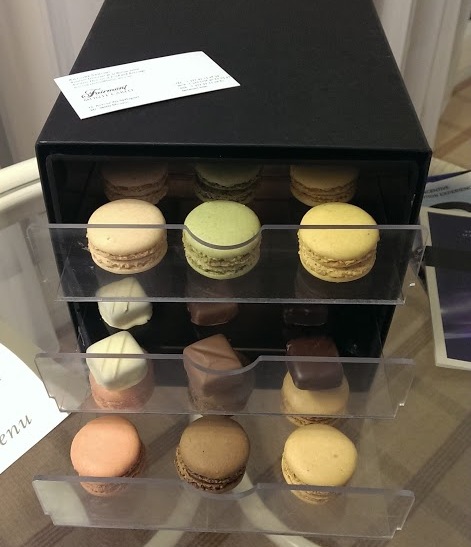
A gift from the management

A gift from the management

Right now you’re probably thinking: that sounds a little bit weird and scary, and in many ways it was – although I think the episode helped to make my point. At breakfast the next day I was greeted like royalty: Ah! Monsieur Té! Bonjour! This way, s’il vous plait… A source of freshly boiled water had miraculously been discovered and the results were genuinely impressive, but it was a hollow victory, for I could see that none of the other guests were sharing in this bounty. They were still washing down their crêpes and croissants with the same dismal, lukewarm, bag-out silage.

The restaurant manager’s assistant, M. Antoine Santini, intercepted me while I was checking out, and breathlessly assured me that my breakfast tea preferences were now on record and would be automatically honoured should I visit at any other Fairmont or affiliated hotel worldwide. I wanted to shake him roughly by the shoulders and make him understand that this was not a random personal eccentricity like wanting your soufflé garnished with rats’ entrails. English Breakfast Tea should always be made this way. For everyone. Everywhere.

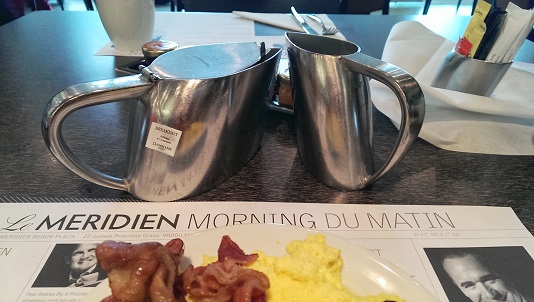
Stupid tea set, undrinkable tea

Stupid tea set, undrinkable tea

This wasn’t quite the end of my sojourn in Monte Carlo. Due to an administrative error I’d been booked out of the Fairmont a day early and had to spend my final night at the slightly less glamorous Meridien Beach Plaza down on Avenue Princesse Grace. What kind of gnarled and calloused fist, I wondered, would they make of my breakfast brew here? I was already braced for disappointment, but the reality was worse than anything I could have imagined. As I was being seated I noticed a waiter emerging from the kitchens bearing a large tray of about two dozen teapots . The pots, pre-filled with water, were destined to sit on the tray losing heat for up to half an hour before eventually being doled out to guests with a bag of tea-dust on the side. My throat tightened, the floor bucked beneath me and a familiar hot churning stirred in my gut…

Unknown's avatar

Prague Winter

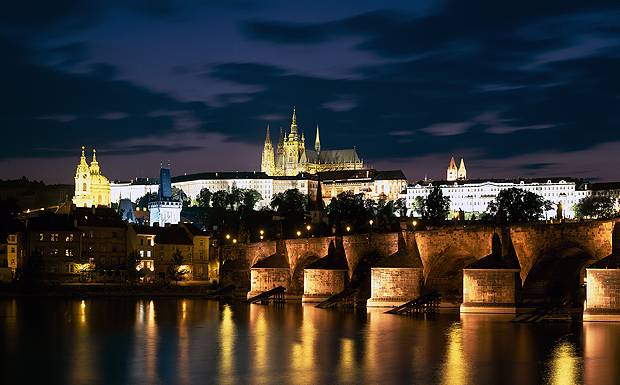
Prague Castle

I have just returned from a tea trade symposium in the Czech Republic – a trip which, given my recent positive experiences in Slovenia, I was anticipating rather keenly. Sadly, the reality did not match my expectations.

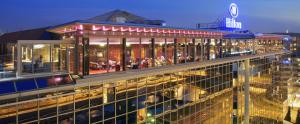
The symposium itself took place in the conference facilities of the splendidly appointed Prague Hilton but, alas, my budget did not quite stretch to affording accomodation there. Instead, I was billeted five minutes walk away on the other side of a grafitti-spattered underpass in a characterful establishment called The Embassy.

Several other conference attendees were also staying there and one of them, a wiry Scot called Ben, observed that it felt a bit like a brothel. I must bow to his superior knowledge on that front, but there was certainly something rather ripe about the busty bottle-blonde who checked me in. She was either in her 40s and trying to look 25, or in her twenties and pursuing an excessively dissolute lifestyle.

As she leaned across the reception desk to hand me my key-card I actually felt a slight breeze from the fluttering of her extravagant false eyelashes, carrying on it a faint scent of vodka fumes laced with juniper.

Hilton, Prague

Hilton, Prague

One might imagine that a recently-issued TripAdvisor ‘Certificate of Excellence’ (like the one prominently displayed next to The Embassy’s lift) would indicate that the establishment to which it has been awarded offers a reasonably good standard of facilities and services. It would seem, however, that this is not the case – as indicated by the following catalogue of shortcomings:

• No in-room tea-making facilities (I was, as always, prepared for this possiblity – but it should be provided by default in any hotel room, like the Corby trouser press and Gideon bible.)

• Inadequate hot-water supply – the shower was either an intermittent scalding trickle or a torrent of glacial meltwater with nothing in between, and filling the bath to a depth sufficient for wetting more than one’s buttocks and the soles of one’s feet took several hours.

• Blast-furnace heating – the radiator was so hot that one could not approach within 3 feet of it without the skin beginning to blister, and there was no way to turn it off short of crimping the pipe with a plumber’s wrench. One night I left a pair of socks on it to dry, and in the morning no trace of them remained save for a dark smear on the wall above where they had been.

• DIY room service – after a particularly gruelling day of listening to the Russian and Chinese delegations sniping at each other I decided to spend a quiet evening in my room rather than going out on the town with the other ‘tea-heads’. I ordered a delicious-sounding risotto from the room service menu and was surprised to learn that I would have to go down to reception to fetch it – something of an inconvenience as by then I had already changed into my dressing-gown and night time support briefs.

• Inconsistent breakfast provision – the one constant feature of the cooked breakfast offerings was lengths of chewy sausage like chunks of fat pepperami still in the plastic sheath. On the first day this was accompanied by a rather delicious offering of lightly sautéed potatoes in a creamy, herb-infused sauce. I sought out this tasty treat on the second day only to find that it had been replaced with penne in spicy tomato paste, then mushy vegetable rice, and on day four, mystifyingly, bread pudding. The ‘orange juice’ was of the same quality and freshness that astronauts on the first manned trip to Mars will be enjoying and the tea came out of a Liptons assortment box in which the most palatable option was, yes, Yellow Label.

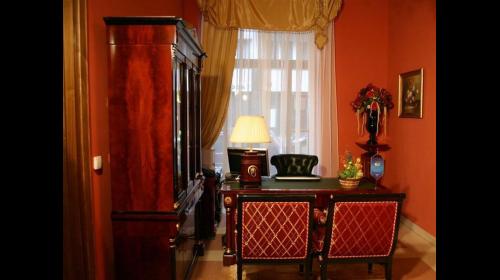
Lobby, Embassy Hotel, Prague

Lobby, Embassy Hotel, Prague

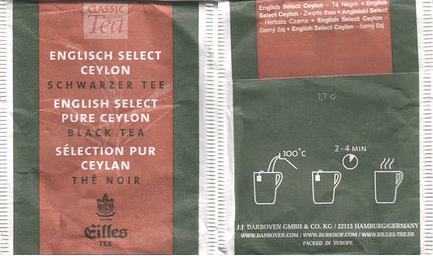
Bitter experience has taught me that breakfast tea in mid-priced continental hotels (aside from those in Germany) will seldom amount to anything worthwhile so, while I was disappointed by The Embassy’s efforts, I was hardly surprised. What did surprise me was the poor fist that the Hilton had made of providing tea for the 130 or so trade representatives attending the symposium. Where one might have expected – as is usual at this sort of event – a selection of fine leaves from the world’s most celebrated tea gardens served in bone china pots, there was instead a shallow basket of assorted sachets, many containing tealess herbal infusions, alongside a large Burco-style urn of thoroughly deoxygenated hot water. The tea, (what little there was) was German in origin, but of the rather second-rate Eilles brand whose marketing people were clearly of the opinion that any kind of black tea can be given a quality makeover by labelling it as ‘English’.

English Ceylon

To be honest, I could not understand how or why the Hilton had screwed things up so badly until I learned that the Russian organizers had arrived a few days early and blown almost the entire refreshment budget on Czech hookers. Typical.

As for the symposium itself, I did take a few notes but there was nothing of sufficent intrest to merit reporting here.

This is probably my last post before the festive season begins in earnest, so I’d like to offer all my readers a generous slice of seasonal good cheer washed down with a steaming mug of M&S Winter Spiced Tea. Pip-pip!

Unknown's avatar

Eastern Promise

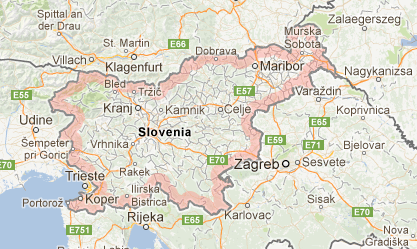
© Google Maps

© Google Maps

Back in the 1970s when I was learning Geography at school there were only nine countries in mainland Europe – France, Germany, Holland, Belgium, Switzerland, Austria, Spain, Italy and Luxembourg. Each had its own easily-recognisable national characteristic – smelly cheese, clogs, chocolates, cuckoo-clocks, genocide and so on – with the exception of Luxembourg. No-one even knew where Luxembourg was, although it was generally imagined to be quite distant judging by the feebleness of the signal from its one and only radio station.

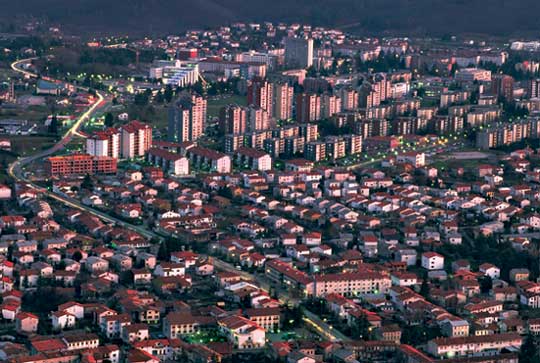
Nowadays there’s an ever-growing multitude of European nations – more than a hundred if the Eurovision Song Contest is anything to go by – and I freely admit that I had to reach for my gazetteer when I received an unexpected tip-off from a reader in Slovenia. (It’s just south of Austria, if you’re curious.) The young border town of Nova Gorica was the location, and I was was surprised to discover that half of it lies in Italy, where it’s called Gorizia. Readers of my report from Sanremo earlier in the year will understand why this set more than a few alarm bells ringing. Mere proximity, however, is no reason to tar the good people of Slovenia with the Italian brush so, with a weekend in hand, I packed my valise and headed east.

Nova Gorica

Nova Gorica – A sort of Slavic Peterborough

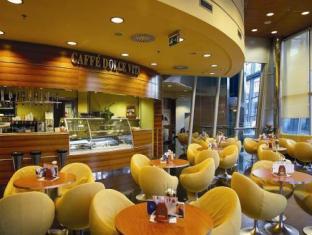
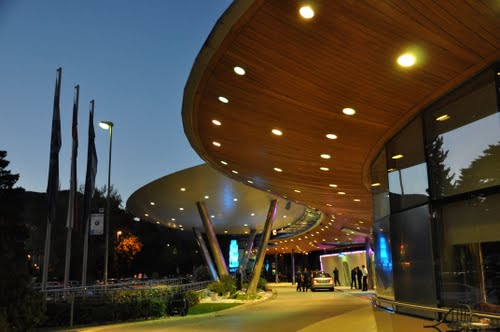
The first thing one notices about Nova Gorica is that there’s a casino on virtually every street corner, but that’s where the similarities with Las Vegas end. Nondescript residential and business zones, clusters of Soviet-era housing blocks and a Brutalist shopping centre complete a provincial townscape conspicuously lacking in glamour or razzamatazz. Most of the casinos look like somewhere you’d go to get your car serviced, but the Perla Hotel and Casino, situated in the centre of the town, exudes a modest degree of swank, with entrances done out in an exuberant nautical style, perhaps to give punters the impression that they are boarding an exotic cruise liner.  This, unlikely as it seemed, was the destination to which my correspondent had sent me – and there, to the right of the lobby, lurking behind a row of glass cases filled with gaudy souvenirs just as he had described, I found the Kaffè Dolce Vita.

Kaffè Dolce Vita (it's usually busier than this)

It’s usually busier than this

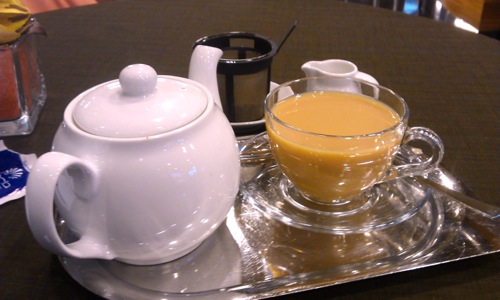
Nestled in a crescent-shaped space hugging the outer wall of the hotel, the café has a moderately cosy atmosphere despite a preponderance of glass and stainless steel, and as I entered I was welcomed by a winning smile from a statuesque blonde waitress with a slight stoop and an interesting nose. I always start with a pot of English Breakfast Tea when breaking new ground. It’s not a mathematically precise standard, but there are certain boxes that should be ticked – robust, earthy flavour; rich, dark colour, and plenty of Assam in the blend. It’s surprising how far short of these benchmarks some ‘English Breakfast’ varieties fall. On a visit to Connecticut last year I was confounded by a brew composed entirely of smoked Chinese leaves – the only connection with English breakfast I could discern was that it smelled like kippers and after just one mouthful I had to gargle with grapefruit juice to get rid of the taste. Fortunately, there were no doubts about the quality of the tea at the Dolce Vita as it was supplied by Ronnefeldt, a German importer and blender with impeccable credentials. The question was, would the waitress do it justice? I watched with some satisfaction as she confidently spooned a measure of loose leaf into a mesh basket, dropped it into a pre-heated porcelain pot and sluiced the contents with demonstrably boiling water. I forgave her for offering me a choice of milk or lemon (only people with severe lactose intolerance issues should consider taking EBT without milk) and carefully carried the small oval silver tray to my table.

Dolce Vita Tea

Satisfaction guaranteed

After such conscientious preparation the tea was hardly going to disappoint, and sure enough it set my taste-buds dancing and singing with delight from the very first sip. The truly remarkable discovery came when I went to pay for it and found that the total bill, including a generous slice of apple strudel, came to only €3.60 – about the same as you’d pay for a cardboard bucket of swill and soggy flapjack at the Upper Crust concession on Paddington Station. Realising that my tea budget would go significantly further than I had anticipated I greedily scanned the dozen or so other varieties on offer behind the counter and picked out a fine Darjeeling for my next pot – this time with a wedge of lemon.

With two days to fill I had planned sight-seeing trips to the Karst caves and Triglav National Park, but after the fourth pot I was feeling excessively relaxed and the weather was dreadful so, taking a necessary break from my libations, I wandered into the gaming area of the Casino. The customers, as far as I could tell, were predominantly Italian and mostly over 50, although there were quite a few young men with bouffant hair and unfeasibly tight trousers gliding up and down between the banks of slot machines, probably on the lookout for lonely widows having a flutter with the life insurance payout. The agents of fortune were on my side that day, and after half an hour of pulling levers and pressing buttons I had increased my original modest stake tenfold. Feeling flush, I graduated to the roulette tables where, in fairly short order, I bagged enough moolah to cover the entire cost of my Slovenian jaunt. That seemed like a good point at which to count my chickens, so I cashed my chips and returned to the Dolce Vita for a celebratory pot of sweet-smelling Ceylon. I was there again when the doors opened on the morrow and while the rain lashed down outside I spent a gloriously lazy day filling myself with tea and pastries and reading my hardback copy of The Hydrogen Sonata. It’s hardly the stuff that travelogues are made of, but by the time I retired to bed I felt as if I had lived the life of Bacchus.

A big hvala then, to Mr Marius Kovska for drawing my attention to this exemplary establishment. It’s clear that Slovenia has much to offer for the curious traveller and I fully intend to return for a longer stay when the weather has improved so that I can discover more about this overlooked corner of the new Europe.

Perla Hotel and Casino

I’ll be back…

Unknown's avatar

Chilling in Seville

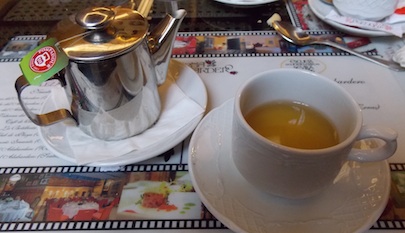
Green tea in Seville

English Breakfast Tea – Seville Style

One thing that can never be said of the international tea business is that it’s dull or predictable. For several months now, I’ve been intimately involved with a couple of hush-hush BTC trade missions that have taken me from the snow-capped mountain fastnesses of Switzerland to the steamy vice-dens of Macau – with a few touches of Bond-style intrigue thrown in along the way. Contractual and legal restrictions prevent me from giving any further details at present, except to say that by the end of it all I was sorely in need of a break.

Those familiar with my views on Spain will be agog at the news that my chosen leisure destination was Seville. This was not the random act of masochism that it might at first seem, for I had been tipped off about a little place of particular interest in the city’s Macarena district (from whence, one imagines, the eponymous floor-filling disco-dance hit originated). It’s a depressing fact that throughout Spain – and particularly in the south – genuine tea enthusiasts are forced into a way of life reminiscent of Jewish Conversos during the Inquisition. In public they dutifully swill thick coffee, corrosive sherry and cheap beer along with their friends and countrymen, but behind closed doors the bone-china pots and fragrant single-estate Darjeeling emerge from hidden compartments under the floorboards and tea is taken with thin-cut crustless sandwiches, buttered scones and malted milk biscuits.

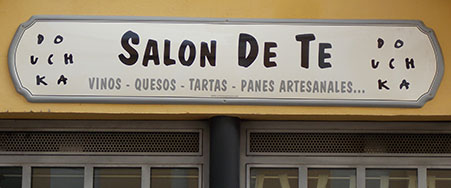
Douchka

An oasis in the wilderness

The Salón De Té Douchka, on the calle San Luis is one of a tiny handful of semi-underground places where these defiant té-pistas can conduct their rituals and indulge their passions in public, among their own kind and, for the most part, without fear of violence. It was something I had to experience.

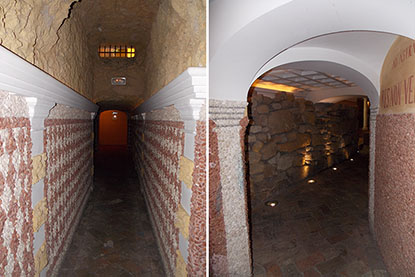
My flight landed too late to seek out this shrine to the true leaf on the day of arrival, so I busied myself setting up my travelling tea-station in the hotel room and perusing a pocket guide to other local attractions. The hotel itself was enchanting, occupying a warren of ancient houses arranged around sunken inner courtyards linked by underground passageways. Fittingly, this had once been the last secret holdout of the Sevillian Jewish community in the dark days of the 16th century, before they were slaughtered or assimilated. I sampled the house tea in the WiFi lounge before retiring to bed, and was predictably underwhelmed.

Las Casas de la Juderia

Which way to breakfast?

The tea on offer in the subterranean breakfast room the following morning was no better – significantly worse in fact – and I elected not to soil my palate with it before setting off to investigate the anticipated pleasures lying in wait for me at the Douchka. Imagine, then, my disappointment on finding the establishment closed. I was not immediately alarmed. Spanish opening hours are a complete mystery to me and I assumed that I had simply got my timing wrong. I unfolded my list of non-tea-related things to do and strolled through the sunlit cobbled streets of the old town, making my way to the Cathedral. I was eager to see its famous central altarpiece, a spectacular gothic retablo carved with numerous intricately detailed bible scenes and dripping with Conquistador gold – but once again, disappointment reared its head. The entire edifice was shrouded with plastic tarpaulins, and although the signs claimed it was being restored, I learned from an unofficial source that the gold is being stripped out to pay off the Germans, and will be replaced with metallic car paint.

The Douchka was still shuttered and dark when I returned that afternoon, and again the following day. While I was peering forlornly through the dusty slats an elderly couple emerged from the building next door and turned in my direction. “Buena tarde, señor y señora.” I offered in my best Google Spanish.  “¿Cuándo es el salón de té abierto?”

At least, I think that’s what I said, but their reaction suggested that I might have accidentally offered to gut them with a filleting knife and hang them by their entrails from the Torre de los Perdegones. The old man pointed a trembling finger in my direction, croaked something that sounded like “¡No hay té!” and dragged his wife (as I assumed the lady to be) back inside before I could reassure them. I tried asking the same question in local shops and bars, where reactions ranged from surly incomprehension to outright hostility, and I’m sorry to report that the Douchka remained resolutely barred and bolted for the remainder of my stay.

It would be ridiculous to conclude from such scant evidence that the Douchka’s proprietor has been dragged away in the dead of night and tossed into a dungeon under the Alcazar Palace where he’s being ‘persuaded’ to renounce the way of tea by men in pointed white hoods. He’s probably just on holiday or something – I’m sure that’s all it is – but this is Spain and old habits die hard, so if any readers find themselves in Seville during the coming months, please take a stroll down the calle San Luis and let me know if there are any signs of activity at No. 46.

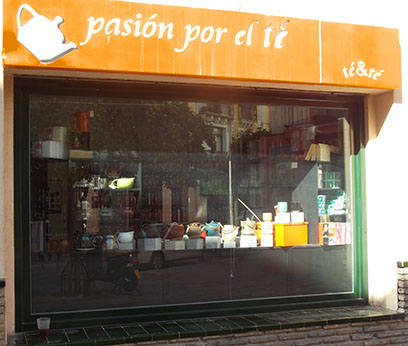
Despite this setback the trip was not entirely wasted. While wandering aimlessly through the Casco antiguo district on my final day, I stumbled across something rather extraordinary  nestled amongst the tapas bars and tourist boutiques. The sign above the heavily reinforced door said Pasión por el Té and, remarkably, it was open for business. As I stepped inside I was filled with a sense of awe and wonder that had been conspicuously absent during my trip to the cathedral. Here was a tea shop with breathtaking purity and clarity of purpose. Shelf after shelf of neatly hand-labelled foil packets containing rare treasures from the world’s most celebrated tea gardens lined the walls, gleaming in the soft light. I’m not ashamed to admit that I was quite overcome. The owner, a personable young fellow called Ignacio with a decent grasp on the English language, was kind enough to offer me a chair, and when I had recovered my composure we traded tea-stories for a pleasant half-hour or so while a Holy Day procession snaked noisily by outside. Before I left, laden down with truly self-indulgent quantities of fine leaf, I commended him for his dedication and bravery. With a wry chuckle he told me that he wasn’t so brave and showed me the panic room behind the counter.

Pasion Por El Te

The Pasión and the Glory

It’s shameful that an honest trader has to take such extreme measures to protect his life and livelihood in what is supposed to be a modern democratic country, and I have written a stiff letter expressing my concerns about the matter to Nils Muižnieks, the European Commisioner for Human Rights. I urge all my readers to do the same.

It belatedly occurs to me, as I sit at home writing these words and enjoying a pot of finest Pasión por el Té Chamray Nilgiri, that I should have asked Ignacio about the Douchka. The té-pistas of Seville are a very close-knit community and if anyone was going to know what had really gone down, he was the hombre.

Unknown's avatar

The Italian Job

Image

As a general rule, the further south one travels in Europe, the less rosy the tea prospects become. I would never go to Spain, for example, without packing a full brewing kit, as I have learned through bitter experience that hotel rooms there often lack even basic water-heating apparatus. There are, of course, isolated British-occupied enclaves where this is not the case, but away from the cosy Costas the tea situation is as arid as the parched hills around Madrid.

It pains me to report that the situation is even worse in Italy if the evidence of my recent visit to the northern coastal resort of Sanremo is anything to go by. Having hired a spacious charabanc at Nice airport, I proceeded along the old Riviera coast road through Monte Carlo (which was bustling with preparations for the Grand Prix – I was thrilled to find myself suddenly swinging around the iconic ‘Loews Hairpin’ corner, the scene of Lewis Hamilton’s climactic tussle with Felipe Massa in the 2011 event, but I digress…).

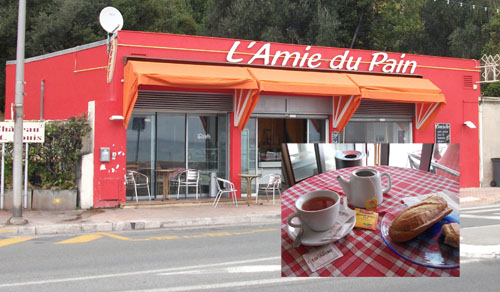
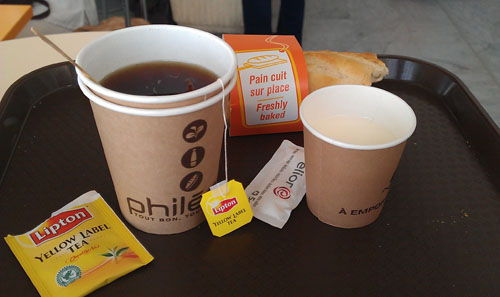
Half a kilometre from the Italian border I stopped off for a quick refresher at what is probably the Riviera’s least pretentious café, where I enjoyed a simple baguette and a pot of the ubiquitous Lipton’s Yellow Label. It was serviceable enough by French standards, and I would have cherished it a great deal more had I any inkling of the ordeal that awaited me on the other side of the border.

There is a distinct change as one passes from the French to the Italian Riviera. The new buildings are uglier, the old buildings grubbier and more dilapidated, the palm trees less healthy.

Battling my way through cantankerous and unpredictable traffic, I missed the concealed turn-off to the Sanremo Hotel Nazionale and found myself negotiating a tangled maze of steep, narrow back-streets. Judiciously pulling over to let a bullish delivery truck pass, I neatly sheared the front number-plate off an Audi that was protruding somewhat from its parking bay at the base of a run-down apartment block. The alarm went off and a hairy woman with flailing arms appeared on the fifth floor balcony; shortly thereafter, she emerged onto the pavement with her spouse, a Hungarian immigrant whose Italian was no better than mine and English non-existent. I’m not one of those misguided souls who expect every Johnny Foreigner to understand the Queen’s English, but under these multi-lingual circumstances our respective French and Italian accident forms took an unfeasibly long time to complete.

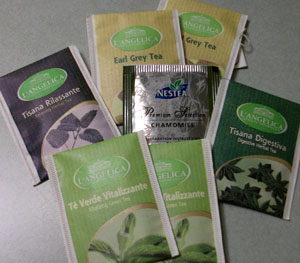
As you may imagine, this stressful experience left me in dire, almost pathological need of a restorative cup of tea, so when I arrived, finally, at my hotel room I was heartily relieved to find that a kettle had been provided, along with an assortment of what looked like fairly standard one-cup tea sachets. On closer inspection, however, it turned out that only two of the varieties on offer actually contained tea, contaminated beyond use in both cases with various additives. I know that Earl Grey has its apologists, but if I wanted to drink tea that tastes like suntan lotion, I could brew up a cup of Tesco Value and squirt some Ambre Solaire into it.

Image

I had, of course, packed my own supply and was soon calming my nerves with a delicious serving of M&S Luxury Gold.

The first indication that I had stumbled into hostile territory came a little later when I was taking dinner in the hotel restaurant. I had chosen the reasonably priced and rather moreish ‘Tourista’ set menu, which included a cup of c*ffee as standard. As is my custom in these situations, I politely requested that the default offering be substituted with a pot of tea. The waiter flared his nostrils disdainfully, and with a toss of the head frostily informed me that it was c*ffee or nothing before mincing away to serve another table.

Suffice it to say that I did not leave a generous tip.

Image

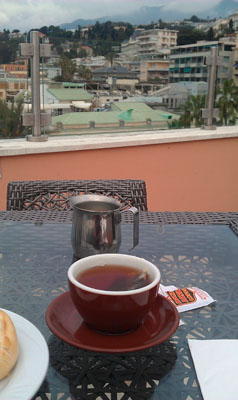
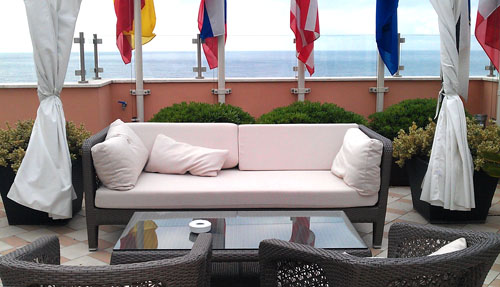
Breakfast was hardly an improvement. The setting was glorious – an al fresco rooftop terrace overlooking the town – but the tea on offer was criminally lacking. The kitchen staff were plainly aware that there is a drink called tea that involves dipping dried leaves in hot water, and that some guests might want to enjoy a cup of this mysterious beverage with their potato omelettes and cured ham, but that’s where their understanding stopped. The quality of the leaf was dismal, and the hot water was the wrong side of 80ºC by a significant margin. The resulting tepid slop cried out to be tossed over the balcony into the streets below, and I was forced to return to my room where I brewed a fine cup of piping hot Bewlay’s Irish Breakfast with which to resume my seat on the terrace.

I’m glad that I did, for it was to be my last taste of tea for a gruelling thirteen hours…

I had a number of promotional duties to perform on behalf of my funding body, The British Tea Council, which started with handing out sample packs of selected British blends to a locally sourced distribution team. As soon as Roberto, Luigi, Stefano and Dirk had been dispatched with their precious offerings, I embarked on a tour of local businesses to espouse the benefits of making tea available in the workplace. Every establishment I went to seemed to have a wheezing, chrome-plated monstrosity capable of retching up a dozen different types of c*ffee, but no kettle, and I was kicking myself for not having taken my trusty Russell Hobbs with me. Rookie error, frankly. By mid afternoon, having drunk only water since leaving the hotel, I was starting to feel discommoded and slightly fretful. In desperation I darted into a grocery store between appointments, intending to purchase several litres of bottled ‘Iced Tea’ (my usual fallback when the fresh option is unavailable). All they had was a solitary, dust shrouded 50cl bottle of Liptons Peach Flavoured, which is a poor option at the best of times as it tends to make your tongue feel like a woollen sports-sock. This particular specimen was more than two years past its best before date and had little thready things floating around in it so, with heavy heart I returned it to the back of the shelf. Things were not quite that bad – yet.

The rest of the afternoon remained resolutely tealess and the only thing that kept me going was the thought of the personal treasures waiting for me by the kettle in my hotel room. But first there was one more duty to fulfil – I had arranged to take Roberto and my other distributors to dinner as a gesture of thanks for their hard work. We retired to a pleasant-seeming restaurant in a side street to the left of the Casino dí Sanremo where my guests ordered huge quantities of food, mainly slabs of extremely rare steak served on a thin bed of lettuce leaves. I raced my way through a lightly-topped pizza, brushed aside the dessert menu and with great anticipation asked the friendly and attractive waitress for a pot of tea. She laughed in my face. Not a cruel laugh, not derisive, just a peal of simple merriment at the sheer ridiculousness of my request.

I suppose it was one of those ‘not in Kansas anymore’ moments. I stood up in a sort of daze, made my excuses, bade my farewells, settled the surprisingly large bill and staggered out into the night.

Image

The rest of my stay in Sanremo is something of a blur, shrouded in a trauma-induced mental fog that did not lift until I ordered a cup of tea in the departures lounge at Nice airport and was treated like a normal human being – but not before enduring one final slap in the face. On my last morning in that godforsaken Italian hole I took a brisk walk along the esplanade that runs westward out of the town centre and discovered the entire stock of samples that I had entrusted to Roberto and his cohorts piled up in a builder’s skip.

I sincerely hope that my experiences in Sanremo are not symptomatic of the state of tea in Italy as a whole, but until I have conducted further investigations I must advise British visitors to that country to proceed with extreme caution – or even better, to go somewhere else entirely. Germany, perhaps.

Unknown's avatar

Brewed in Berlin

Image

It’s a sad fact that Britain’s reputation as a nation of tea-drinkers is founded more on the quantity of our consumption than on the quality. Restauants and cafes tend to select their teas on the basis of whatever’s discounted at the local cash’n’carry, and the resulting slop is generally served without care or finesse. Even those establishments that aspire to offer something more than just a generic cuppa seldom look beyond the ubiquitous Twinings variety pak. We have lost our race memory of just how special and revered a place tea used to have in our lives.

Germany boasts Europe’s third highest tea consumption rate per capita, so one might imagine that German tea drinkers are just as blasé as Brits about the quality of their brew, but on a recent fact-finding trip to Berlin I discovered that this was not the case. Tea has not been commoditised to the same extent as it has in the UK, and  the customary German efficiency and attention to detail pretty much guarantees a satisfactory tea-drinking experience, wherever it’s served.

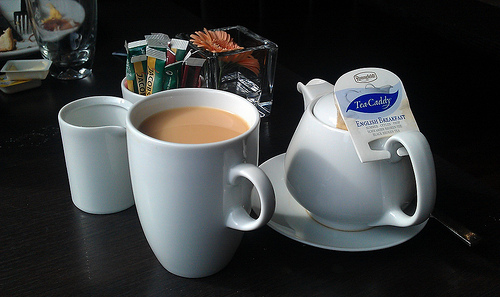
British visitors are likely to marvel at the sheer magnitude of German tea-bags. They are typically the size of gym socks and attached to a cardboard tag that slips over the handle of the pot so that the bag can be removed when the desired strength has been attained. The voluminous nature of the bags means that they yeild a brew equal in quality to loose-leaf tea. Even the much-vaunted PG tips pyramid bag is little better than a second hand Vauxhall Corsa in comparison to Fritz’s V-12 Mercedes AMG. Germany, therefore, is an excellent destination for jaded British tea-drinkers who wish to rediscover their love and respect for our ‘national drink’.

The Tea Caddy says ‘well done, Jerry’.

Unknown's avatar

Who, what and why.

Hello and welcome to The Tea Caddy’s inaugural blog, brought to you by the original Mr Tea (est. 1984).

I hope you’ll join me here often for a heady brew of tea news & reviews, tea lore and occasional non-tea-related digressions as I travel the world in search of the perfect cuppa.

You can find out more about my mission to promote excellence in all things tea-related on The Tea Caddy web site.