Unknown's avatar

Moon Glampers

The Sunday Times TV critic, AA Gill, doesn’t mince his words when something on the box displeases him. I don’t always agree with his elitist, clenched-buttock judgements, but his recent, surgically-precise evisceration of Sue Perkins (Nov 16) was right on the money. The profoundly unremarkable Ms. Perkins has somehow become a ubiquitous part of the British television landscape, popping up on endless Z-List panel shows and hosting factual programmes on a bewildering variety of subjects about which she has neither insight nor specialist knowledge.
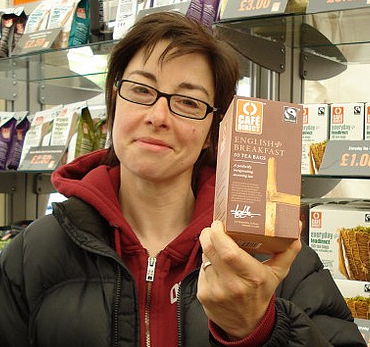
PERKINS - UNREMARKABLE

PERKINS – UNREMARKABLE

When watching her ply her trade, I am reminded of the nightmare world envisioned by noted American author and humanist, Kurt Vonnegut (1922-2007) in his short story, Harrison Bergeron. It’s the near future and equality legislation has gone mad, especially in the TV industry. No one can be seen to be better than anyone else and any hint of excess talent or ability is ruthlessly stamped out by the office of the Handicapper General (a post occupied by the shotgun-wielding Diana Moon Glampers): the overly-nimble are hobbled with bags of lead shot, the quick-witted fitted with headphones that deliver deafening blasts of noise at random intervals, and the physically beautiful dressed down and uglied-up. Perkins, transplanted into this fictional scenario, would require none of these handicaps.

VONNEGUT - PEERLESS

VONNEGUT – PEERLESS

It’s unclear, in Vonnegut’s brief narrative, whether or not food and drink come under the remit of the Handicapper General, but I fear that Mrs Moon Glampers (or someone very much like her) has been at work in the tea departments of Britain’s major supermarkets. Why else would they be peddling premium teas in ridiculous little round bags that render the flavour virtually indistinguishable from that of their low-grade budget offerings?

This is not a new issue. I have been campaigning against the scourge of the round tea-bag for more than a decade now and, at last, the tide is turning. In July this year the British Advertising Standards Agency definitively ruled that bigger bags really do make a better brew. In light of this landmark decision I feel that it’s time for a fresh blast of the trumpet in the form of an open letter to Steve Rowe, executive director for food at one of Britain’s most respected retailers, Marks & Spencer.

ROWE - UP THE CREEK

ROWE – UP THE CREEK

Dear Mr Rowe,

This letter concerns M&S Luxury Gold tea and your company policy with regard to tea bags. 

In its loose form Luxury Gold is, nonpareil, the best blended black tea on the British high street. I often recommend it to tea-drinking friends, acquaintances and workmates – who are invariably delighted by its rich and distinctive flavour. I remain, however, perpetually disappointed by the bagged variety because of the pathetically diminutive round bags in which it is currently incarcerated.

Any tea-taster worth his salt knows that tea leaves need space for the hot water to circulate around them during the brewing process, and yet you insist on imprisoning your flagship blend in cramped circular quarters 35% smaller than the generous rectangular bags used for your Infusions range and almost 50% less roomy than the handsome pyramid bags chosen to grace your delicious new single estate Assam. Why is Luxury Gold so poorly served? The little round bag might be adequate for the casual tea drinker who likes to leave it soaking in milk at the bottom of the cup while the kettle boils, but for those who appreciate a properly prepared brew, it’s just not good enough.

The round bag’s cheerleaders have always dismissed as unproven any suggestion that its reduced dimensions impede the brewing process (in rather the same way that tobacco companies used to dismiss the link between cigarettes and lung cancer). Not any more. When the ASA threw out Tata Global Beverages’ complaint about a PG Tips advertisement denigrating round bags earlier this year, they officially endorsed the overwhelming body of evidence proving that larger bags have ‘better brewing efficiency’.

In the face of these unequivocal findings it seems reasonable to assume that Marks & Spencer, with its traditional emphasis on quality, is presently taking steps to eliminate the inferior, flavour-sapping round bag from its entire range of teas, including Luxury Gold, with all due despatch. Can you confirm that this is the case?

Yours sincerely,

Etc.

I shall report in these pages on how (and if) Mr Rowe responds. In the meantime, any readers wishing to add their voices to mine can reach Mr Rowe at the following address:

Steve Rowe
Executive Director, Food
Marks and Spencer Group plc
Waterside House
35 North Wharf Road
London  W2 1NW
Unknown's avatar

Eastern Promise

© Google Maps

© Google Maps

Back in the 1970s when I was learning Geography at school there were only nine countries in mainland Europe – France, Germany, Holland, Belgium, Switzerland, Austria, Spain, Italy and Luxembourg. Each had its own easily-recognisable national characteristic – smelly cheese, clogs, chocolates, cuckoo-clocks, genocide and so on – with the exception of Luxembourg. No-one even knew where Luxembourg was, although it was generally imagined to be quite distant judging by the feebleness of the signal from its one and only radio station.

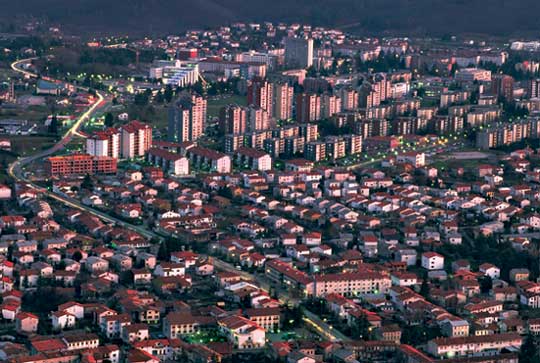
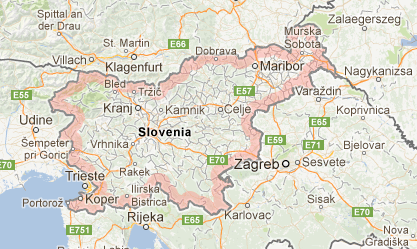
Nowadays there’s an ever-growing multitude of European nations – more than a hundred if the Eurovision Song Contest is anything to go by – and I freely admit that I had to reach for my gazetteer when I received an unexpected tip-off from a reader in Slovenia. (It’s just south of Austria, if you’re curious.) The young border town of Nova Gorica was the location, and I was was surprised to discover that half of it lies in Italy, where it’s called Gorizia. Readers of my report from Sanremo earlier in the year will understand why this set more than a few alarm bells ringing. Mere proximity, however, is no reason to tar the good people of Slovenia with the Italian brush so, with a weekend in hand, I packed my valise and headed east.

Nova Gorica

Nova Gorica – A sort of Slavic Peterborough

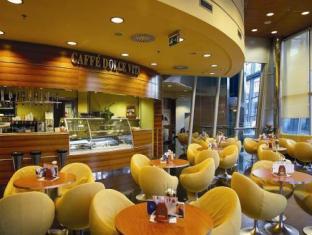
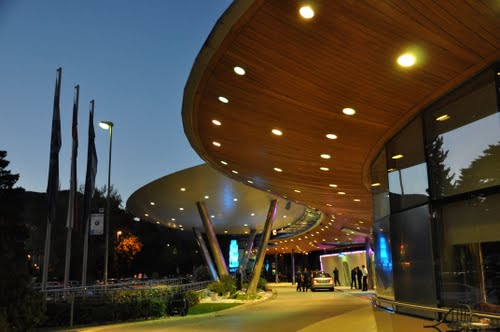
The first thing one notices about Nova Gorica is that there’s a casino on virtually every street corner, but that’s where the similarities with Las Vegas end. Nondescript residential and business zones, clusters of Soviet-era housing blocks and a Brutalist shopping centre complete a provincial townscape conspicuously lacking in glamour or razzamatazz. Most of the casinos look like somewhere you’d go to get your car serviced, but the Perla Hotel and Casino, situated in the centre of the town, exudes a modest degree of swank, with entrances done out in an exuberant nautical style, perhaps to give punters the impression that they are boarding an exotic cruise liner.  This, unlikely as it seemed, was the destination to which my correspondent had sent me – and there, to the right of the lobby, lurking behind a row of glass cases filled with gaudy souvenirs just as he had described, I found the Kaffè Dolce Vita.

Kaffè Dolce Vita (it's usually busier than this)

It’s usually busier than this

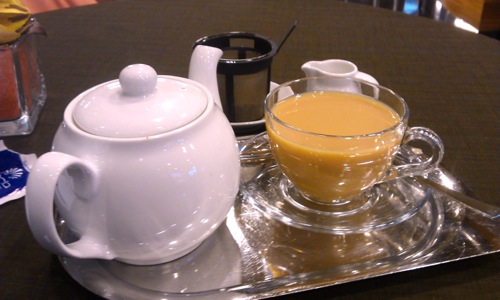
Nestled in a crescent-shaped space hugging the outer wall of the hotel, the café has a moderately cosy atmosphere despite a preponderance of glass and stainless steel, and as I entered I was welcomed by a winning smile from a statuesque blonde waitress with a slight stoop and an interesting nose. I always start with a pot of English Breakfast Tea when breaking new ground. It’s not a mathematically precise standard, but there are certain boxes that should be ticked – robust, earthy flavour; rich, dark colour, and plenty of Assam in the blend. It’s surprising how far short of these benchmarks some ‘English Breakfast’ varieties fall. On a visit to Connecticut last year I was confounded by a brew composed entirely of smoked Chinese leaves – the only connection with English breakfast I could discern was that it smelled like kippers and after just one mouthful I had to gargle with grapefruit juice to get rid of the taste. Fortunately, there were no doubts about the quality of the tea at the Dolce Vita as it was supplied by Ronnefeldt, a German importer and blender with impeccable credentials. The question was, would the waitress do it justice? I watched with some satisfaction as she confidently spooned a measure of loose leaf into a mesh basket, dropped it into a pre-heated porcelain pot and sluiced the contents with demonstrably boiling water. I forgave her for offering me a choice of milk or lemon (only people with severe lactose intolerance issues should consider taking EBT without milk) and carefully carried the small oval silver tray to my table.

Dolce Vita Tea

Satisfaction guaranteed

After such conscientious preparation the tea was hardly going to disappoint, and sure enough it set my taste-buds dancing and singing with delight from the very first sip. The truly remarkable discovery came when I went to pay for it and found that the total bill, including a generous slice of apple strudel, came to only €3.60 – about the same as you’d pay for a cardboard bucket of swill and soggy flapjack at the Upper Crust concession on Paddington Station. Realising that my tea budget would go significantly further than I had anticipated I greedily scanned the dozen or so other varieties on offer behind the counter and picked out a fine Darjeeling for my next pot – this time with a wedge of lemon.

With two days to fill I had planned sight-seeing trips to the Karst caves and Triglav National Park, but after the fourth pot I was feeling excessively relaxed and the weather was dreadful so, taking a necessary break from my libations, I wandered into the gaming area of the Casino. The customers, as far as I could tell, were predominantly Italian and mostly over 50, although there were quite a few young men with bouffant hair and unfeasibly tight trousers gliding up and down between the banks of slot machines, probably on the lookout for lonely widows having a flutter with the life insurance payout. The agents of fortune were on my side that day, and after half an hour of pulling levers and pressing buttons I had increased my original modest stake tenfold. Feeling flush, I graduated to the roulette tables where, in fairly short order, I bagged enough moolah to cover the entire cost of my Slovenian jaunt. That seemed like a good point at which to count my chickens, so I cashed my chips and returned to the Dolce Vita for a celebratory pot of sweet-smelling Ceylon. I was there again when the doors opened on the morrow and while the rain lashed down outside I spent a gloriously lazy day filling myself with tea and pastries and reading my hardback copy of The Hydrogen Sonata. It’s hardly the stuff that travelogues are made of, but by the time I retired to bed I felt as if I had lived the life of Bacchus.

A big hvala then, to Mr Marius Kovska for drawing my attention to this exemplary establishment. It’s clear that Slovenia has much to offer for the curious traveller and I fully intend to return for a longer stay when the weather has improved so that I can discover more about this overlooked corner of the new Europe.

Perla Hotel and Casino

I’ll be back…