Unknown's avatar

Curse of the Medusa

A cautionary tale

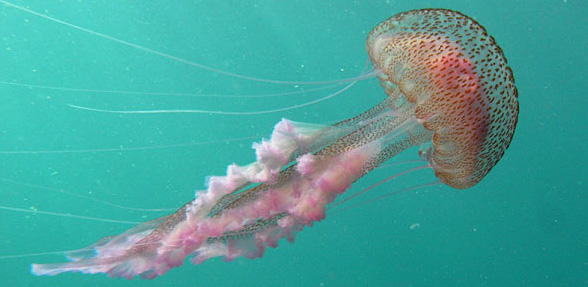
Pelagia noctiluca

Pelagia noctiluca, colloquially known as the ‘mauve stinger’

No one had warned me about the jellyfish. Not the Dorling Kindersley regional guide, not the resort brochure, not the holiday rep; none of them had breathed a word about the monstrous blooms of Pelagia noctiluca currently blighting the northern reaches of the Mediterranean. It was, therefore, entirely without trepidation that I plunged into the warm, clear waters off the Côte d’Azure on that fateful morning in late July.

Mrs Tea and I had discovered an unoccupied beach along the rugged patch of coastline at the foothills of the Massif de l’Esterel, midway between St Tropez and Cannes. The sea was a little choppy after the previous night’s storm, but nothing too challenging, and I had set my sights on a rocky outcrop about 150 yards offshore, tragically unaware of the malignant forces lurking beneath the sparkling wavelets and wholly unprepared for the hellish ordeal that lay ahead.
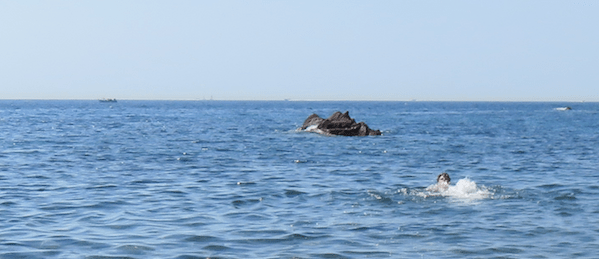
Swimming

What could possibly go wrong?

The little beach looked satisfyingly distant when I clambered triumphantly onto the rock and turned back to wave reassuringly at Mrs Tea. From my new vantage point I could see other beaches, separated by jagged buttresses thrusting out from the rust-red cliffs: to the left, another pebble-filled cove, occupied by a brace of orange canoes and their owners; to the right a much larger and more populous beach with a decent stretch of sand, beach balls, brightly-coloured buckets, families playing. This, I decided, would be my next destination.

I had covered about half the distance when the nightmare began. Without warning, an explosion of searing pain ripped through my left arm, effectively disabling it. There is a scene in the TV series, Kung Fu, where David Carradine lifts a red hot urn filled with burning coals by clamping it between his naked forearms. Flesh sizzles. Acrid smoke plumes from burning skin. That’s pretty much exactly what it felt like. The safe haven of the shore seemed suddenly very far away. Fearfully scanning the bobbing waves I soldiered on, struggling not to swim in circles like a broken wind-up bath toy.

Grasshopper gets burned

Don’t try this at home

Subsequent research has taught me that the venom produced by Pelagia noctiluca ranks quite highly on the standard indices of pain and toxicity – I can attest to this, because that first strike turned out to be a mere aperitif. I had managed only a few strokes before a veritable apocalypse of agony tore into my abdomen. The pain was beyond description. My vision blurred and a montage of harrowing scenes from The Passion of the Christ looped feverishly through my mind. Thrashing desperately, I somehow made it back to dry land without further injury, and when I finally stumbled up onto the sandy beach, twitching and cursing like a chronic Tourettes sufferer, a man standing at the water’s edge tutted and pointed knowingly at the livid, palm-sized weal on the side of my stomach. “La Medusa”, he intoned solemnly.
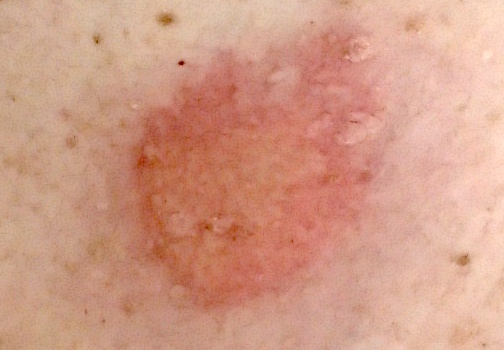
Jellyfish wound

One week later

Pelagia noctiluca delivers its venom by firing fusillades of tiny, toxin-filled hypodermic darts at anything that comes into contact with it. They penetrate the skin, continuing to pump out poison for days, even weeks afterwards. But for all its ferocity, this formidable biological weaponry is only effective over a very limited range. A single layer of fabric is generally enough to shield the wearer from harm. I could have protected myself, if only I had been warned. Instead, I spent the rest of that day whimpering pathetically and feeling about as comfortable as Leonardo DiCaprio after the bear attack in The Revenant.

So, to any readers who are visiting the south of France and fancy a swim in the sea, my advice is this: you need to wear a burkini.
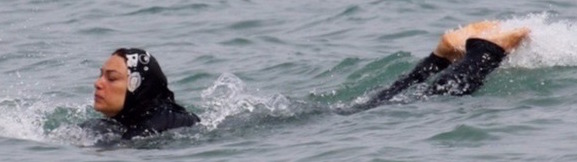
burkini

Full face-mask plus rubber gloves and footwear also recommended
Unknown's avatar

Eastern Promise

© Google Maps

© Google Maps

Back in the 1970s when I was learning Geography at school there were only nine countries in mainland Europe – France, Germany, Holland, Belgium, Switzerland, Austria, Spain, Italy and Luxembourg. Each had its own easily-recognisable national characteristic – smelly cheese, clogs, chocolates, cuckoo-clocks, genocide and so on – with the exception of Luxembourg. No-one even knew where Luxembourg was, although it was generally imagined to be quite distant judging by the feebleness of the signal from its one and only radio station.

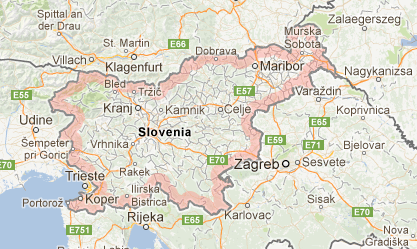
Nowadays there’s an ever-growing multitude of European nations – more than a hundred if the Eurovision Song Contest is anything to go by – and I freely admit that I had to reach for my gazetteer when I received an unexpected tip-off from a reader in Slovenia. (It’s just south of Austria, if you’re curious.) The young border town of Nova Gorica was the location, and I was was surprised to discover that half of it lies in Italy, where it’s called Gorizia. Readers of my report from Sanremo earlier in the year will understand why this set more than a few alarm bells ringing. Mere proximity, however, is no reason to tar the good people of Slovenia with the Italian brush so, with a weekend in hand, I packed my valise and headed east.

Nova Gorica

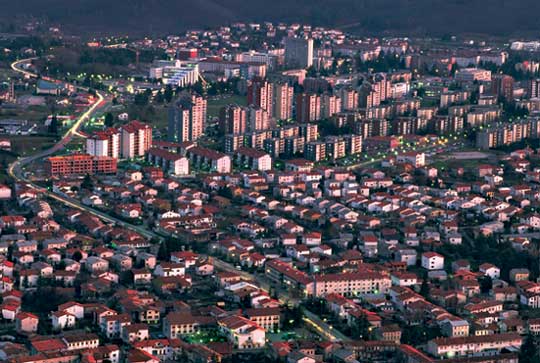
Nova Gorica – A sort of Slavic Peterborough

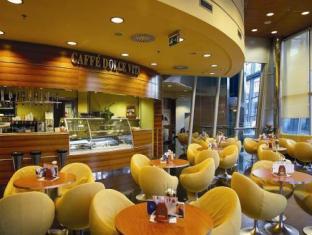
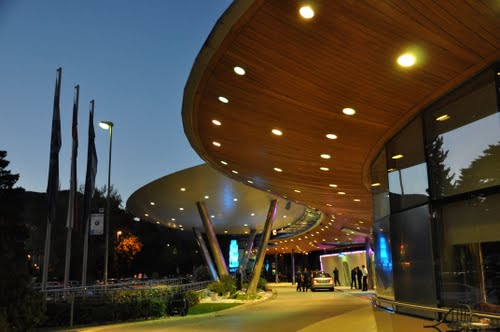
The first thing one notices about Nova Gorica is that there’s a casino on virtually every street corner, but that’s where the similarities with Las Vegas end. Nondescript residential and business zones, clusters of Soviet-era housing blocks and a Brutalist shopping centre complete a provincial townscape conspicuously lacking in glamour or razzamatazz. Most of the casinos look like somewhere you’d go to get your car serviced, but the Perla Hotel and Casino, situated in the centre of the town, exudes a modest degree of swank, with entrances done out in an exuberant nautical style, perhaps to give punters the impression that they are boarding an exotic cruise liner.  This, unlikely as it seemed, was the destination to which my correspondent had sent me – and there, to the right of the lobby, lurking behind a row of glass cases filled with gaudy souvenirs just as he had described, I found the Kaffè Dolce Vita.

Kaffè Dolce Vita (it's usually busier than this)

It’s usually busier than this

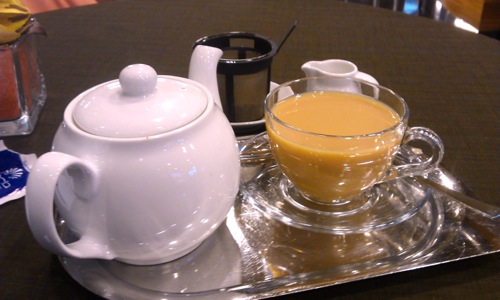
Nestled in a crescent-shaped space hugging the outer wall of the hotel, the café has a moderately cosy atmosphere despite a preponderance of glass and stainless steel, and as I entered I was welcomed by a winning smile from a statuesque blonde waitress with a slight stoop and an interesting nose. I always start with a pot of English Breakfast Tea when breaking new ground. It’s not a mathematically precise standard, but there are certain boxes that should be ticked – robust, earthy flavour; rich, dark colour, and plenty of Assam in the blend. It’s surprising how far short of these benchmarks some ‘English Breakfast’ varieties fall. On a visit to Connecticut last year I was confounded by a brew composed entirely of smoked Chinese leaves – the only connection with English breakfast I could discern was that it smelled like kippers and after just one mouthful I had to gargle with grapefruit juice to get rid of the taste. Fortunately, there were no doubts about the quality of the tea at the Dolce Vita as it was supplied by Ronnefeldt, a German importer and blender with impeccable credentials. The question was, would the waitress do it justice? I watched with some satisfaction as she confidently spooned a measure of loose leaf into a mesh basket, dropped it into a pre-heated porcelain pot and sluiced the contents with demonstrably boiling water. I forgave her for offering me a choice of milk or lemon (only people with severe lactose intolerance issues should consider taking EBT without milk) and carefully carried the small oval silver tray to my table.

Dolce Vita Tea

Satisfaction guaranteed

After such conscientious preparation the tea was hardly going to disappoint, and sure enough it set my taste-buds dancing and singing with delight from the very first sip. The truly remarkable discovery came when I went to pay for it and found that the total bill, including a generous slice of apple strudel, came to only €3.60 – about the same as you’d pay for a cardboard bucket of swill and soggy flapjack at the Upper Crust concession on Paddington Station. Realising that my tea budget would go significantly further than I had anticipated I greedily scanned the dozen or so other varieties on offer behind the counter and picked out a fine Darjeeling for my next pot – this time with a wedge of lemon.

With two days to fill I had planned sight-seeing trips to the Karst caves and Triglav National Park, but after the fourth pot I was feeling excessively relaxed and the weather was dreadful so, taking a necessary break from my libations, I wandered into the gaming area of the Casino. The customers, as far as I could tell, were predominantly Italian and mostly over 50, although there were quite a few young men with bouffant hair and unfeasibly tight trousers gliding up and down between the banks of slot machines, probably on the lookout for lonely widows having a flutter with the life insurance payout. The agents of fortune were on my side that day, and after half an hour of pulling levers and pressing buttons I had increased my original modest stake tenfold. Feeling flush, I graduated to the roulette tables where, in fairly short order, I bagged enough moolah to cover the entire cost of my Slovenian jaunt. That seemed like a good point at which to count my chickens, so I cashed my chips and returned to the Dolce Vita for a celebratory pot of sweet-smelling Ceylon. I was there again when the doors opened on the morrow and while the rain lashed down outside I spent a gloriously lazy day filling myself with tea and pastries and reading my hardback copy of The Hydrogen Sonata. It’s hardly the stuff that travelogues are made of, but by the time I retired to bed I felt as if I had lived the life of Bacchus.

A big hvala then, to Mr Marius Kovska for drawing my attention to this exemplary establishment. It’s clear that Slovenia has much to offer for the curious traveller and I fully intend to return for a longer stay when the weather has improved so that I can discover more about this overlooked corner of the new Europe.

Perla Hotel and Casino

I’ll be back…